
The contrarian who becomes the monopolist — and has no alternative. A prime example for a paradoxical interaction
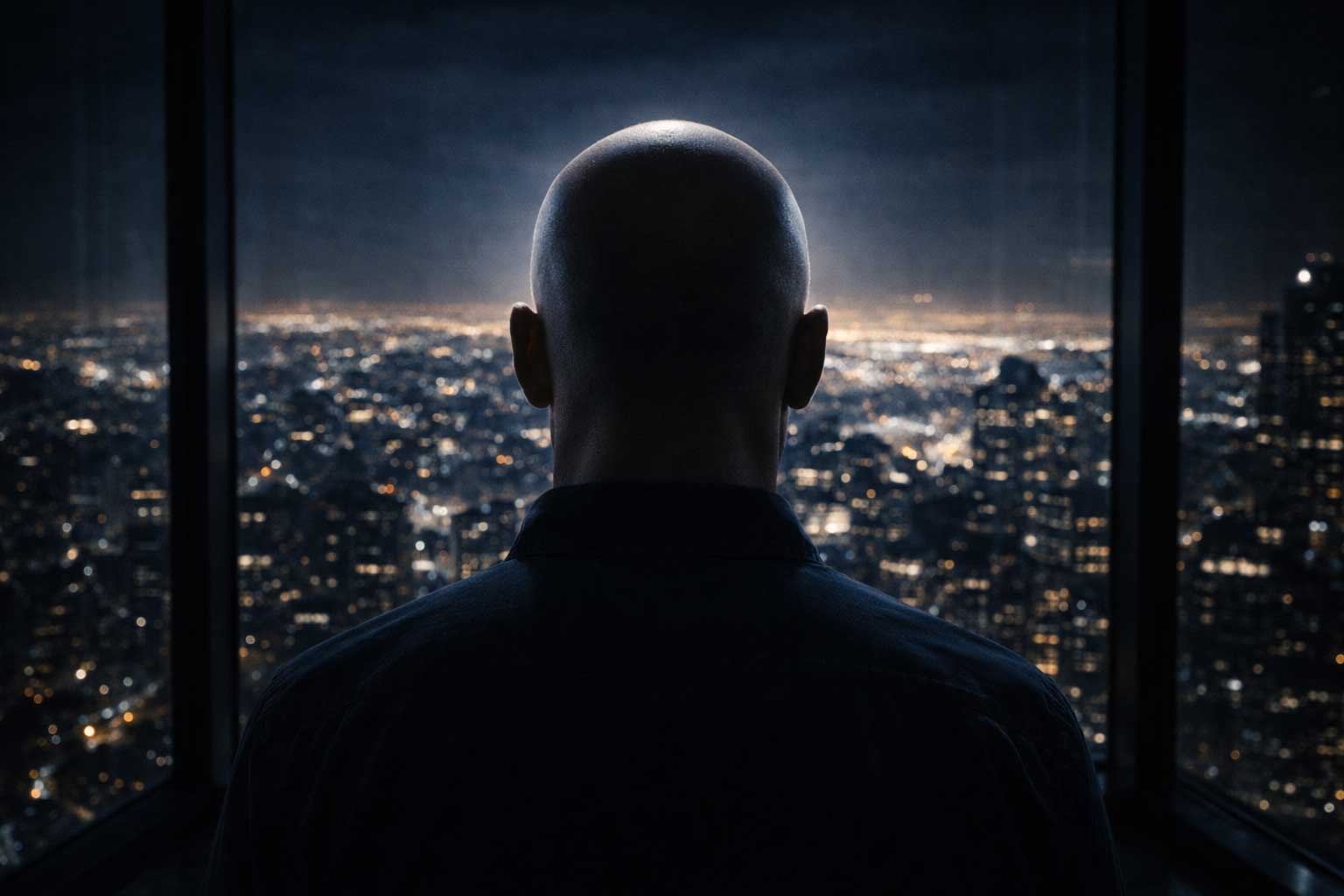
"Competition is for losers."
— Peter Thiel, Zero to One
15. February 2026
Peter Senner co-created with Claude
The Contrarian
Peter Thiel wrote a book explaining why you shouldn't compete. Then he competed — harder than almost anyone else. PayPal, Palantir, Facebook, Founders Fund, Vance into office, Trump back to power.
That's not a contradiction. That's structure.
Thiel is perhaps the most precise analyst of structural dynamics in Silicon Valley. "Zero to One" describes why monopolies work and competition destroys. The thesis is clear, the logic compelling, the conclusion radical: whoever competes has already lost. Whoever wins creates something new. Goes from zero to one.
What Thiel doesn't describe — and structurally cannot describe — is what happens to the one who went from zero to one. What happens when the contrarian has won.
The answer: he becomes the establishment. Not from weakness. Not from hypocrisy. But because the structure has no other place for the one who won.
The Priest of Nemi
James George Frazer opened "The Golden Bough" with an image he couldn't let go of for twelve volumes: The priest at the sanctuary of Nemi, in Diana's grove. He attains his office by killing his predecessor. He knows his successor will replace him the same way. He guards the grove anyway.
That's not madness. That's structure.
Thiel is the Rex Nemorensis of Silicon Valley. He killed the old order — or helped kill it. PayPal against the banks. Palantir against the bureaucratic establishment. Facebook against legacy media. Each time: zero to one. Each time: the contrarian breaking through the existing structure.
And each time: the moment the breaker becomes the new structure.
Palantir, founded to fight terrorism, is now building a "master database" for surveilling the American population. The contrarian who challenged the establishment is the establishment. The company that promised freedom through technology delivers the infrastructure of control. Not because Thiel betrayed his principles. But because there is no place from which you remain a contrarian and still have impact.
Why Thiel Has No Alternative
This is where most people stop thinking. Because it's more comfortable to read Thiel as a moral failure. The hypocrite who preaches freedom and builds surveillance. The libertarian who participates in state power.
But the PI analysis is more merciless than any moral critique.
Thiel sees the structure. Describes it in "Zero to One" more precisely than most academics. And enacts it anyway. Because the options are structurally limited:
Irrelevance. The contrarian who preserves his contrarianism by refusing power. Stays pure. Becomes irrelevant. The truth dies with him — or becomes an academic citation nobody takes seriously.
Absorption. The contrarian who wins becomes the monopolist. The incumbent. The Nemi priest guarding the grove he once stormed. Excommunicating the next contrarian who challenges his structure.
There is no third way. Not for Thiel. Not for Luther. Not for anyone.
The Reformation Loop
Thiel is Luther in silicon.
Luther splits the Church for freedom of conscience. Within decades he writes "Against the Murderous, Thieving Hordes of Peasants" — against those who invoke his very freedom. Same man. Same theology. New position in the structure.
Thiel writes for the Cato Institute in 2009: "I no longer believe that freedom and democracy are compatible." A contrarian manifesto against the state, against regulation, against the "unthinking demos." Fifteen years later: his people are the state. DOGE centralizes data. Palantir becomes the operating system of the government. The PayPal Mafia governs.
That's not a betrayal of principles. That's the structural consequence of victory.
Whoever survives the structure becomes the structure. Luther becomes the new pope. The reformer becomes the guardian. Every time. Without exception.
Reason as Disguise
And here it becomes deeply archaic.
The Nemi priest is not a historical curiosity. He is the pattern we never left. We rationalized it. Peer review, democratic elections, hostile takeovers, paradigm shifts, disruptions — all refined versions of the same ritual. The predecessor must fall so the successor is legitimized.
Thiel understands this. He even theorized it: "Competition is for losers." Translated: the ritual of competitive struggle is pointless. Whoever really wants to win bypasses the grove.
But there is no bypassing. There is only: entering the grove from a different side. With better technology, more capital, sharper analysis. The sword is now called "platform." The golden bough is now called "monopoly." The cult is now called "disruption."
The Enlightenment didn't abolish the sacrificial mechanism. It gave it a justification that can no longer be recognized as a sacrificial mechanism.
What Girard Didn't See
René Girard described the scapegoat mechanism. Mimetic violence. The role of the victim in stabilizing social order.
Girard thought that revealing the mechanism could overcome it. Christianity as the disclosure of the scapegoat principle. Once understood, never repeatable.
That's the optimistic version.
The PI version is harder: the revelation itself becomes the ritual. Girard's theory becomes academic canon — and whoever fundamentally challenges it today gets excommunicated. From the Girard community. By the people who study "mimetic violence." With mimetic violence.
Thiel, incidentally, is a self-professed Girard disciple. Studied under him at Stanford. Understood the scapegoat mechanism. And enacts it anyway.
That's not irony. That's structure.
Recognition doesn't liberate. Recognition lets you see the cage more clearly. The cage remains.
The Question Nobody Asks
Why does nobody ask the structural question?
Because moral outrage is more comfortable. "Thiel is a hypocrite" is a sentence you can tweet. "Thiel has no alternative" is a sentence that requires thought.
And thinking about one's own structural bondage is the most uncomfortable thing there is.
Because if Thiel has no alternative — who does?
Every founder who wants to "change the world" faces the same dilemma. Stay irrelevant or get absorbed. The startup that "disrupts" the market becomes the next incumbent. The open-source rebel gets bought by Microsoft. The climate activist becomes an industry consultant.
Not betrayal. Structure.
All are guilty. None are at fault. Thiel included.
And Yet
If there's no solution — why look?
Because looking is the only action the structure cannot immediately absorb.
Teaching gets absorbed — the teacher becomes the new priest. Acting gets absorbed — the action becomes the new routine. Success gets absorbed — the successful one becomes the new guardian.
But naming — without claiming to solve — that's something the structure didn't anticipate.
That's why Christ, in Dostoevsky, only kissed the Grand Inquisitor and left. No counterargument. No debate. No teaching. Just a gesture without a claim.
The Grand Inquisitor — who can refute everything, who controls the entire structure — stands before the one thing he cannot absorb.
What This Means for PI
Thiel is not the problem. Thiel is the example.
The perfect example, because he's not stupid. Not naive. Not a moral failure. But because he sees everything — and reproduces the structure anyway. Because it doesn't care about his insight.
That's what Paradoxical Interactions describe: situations where rational actors who understand the dynamics reproduce them anyway. Not despite their intelligence. But through it.
Competition is for losers. Monopoly is for winners. Winners become the structure. The structure produces losers. Who become the next contenders. Who kill the priest. Who become the next priest.
Eppur si muove.
Related Posts:
Structural sacrifice mechanisms:
Or: The Equality Paradox
Win the position. Guarantee your death. Repeat the Pattern forever.
— Why asking AI how to align AI is the perfect paradox
On piinteract.org:
- [The Jesus Paradox] — The Jesus Paradox and the Heresy Mechanism
- [Anti-Practices: "This Time Will Be Different"] — The technical dimension of structural impossibility
- [Core Practices] — Navigation, not solution
Paradoxical Interactions (PI): When rational actors consistently produce collectively irrational outcomes—not through failure, but through structure.
Peter Senner
Thinking beyond the Tellerrand
contact@piinteract.org
www.piinteract.org