

Why the solar system is an accident of mutual displacement — and why that is the only kind of stability that lasts.
"Saturnus autem Caelo, ut Graeci tradunt, a filio Iove dejectus est." "Saturn, as the Greeks tell it, was cast down from heaven by his son Jupiter."
— Cicero, De Natura Deorum, II
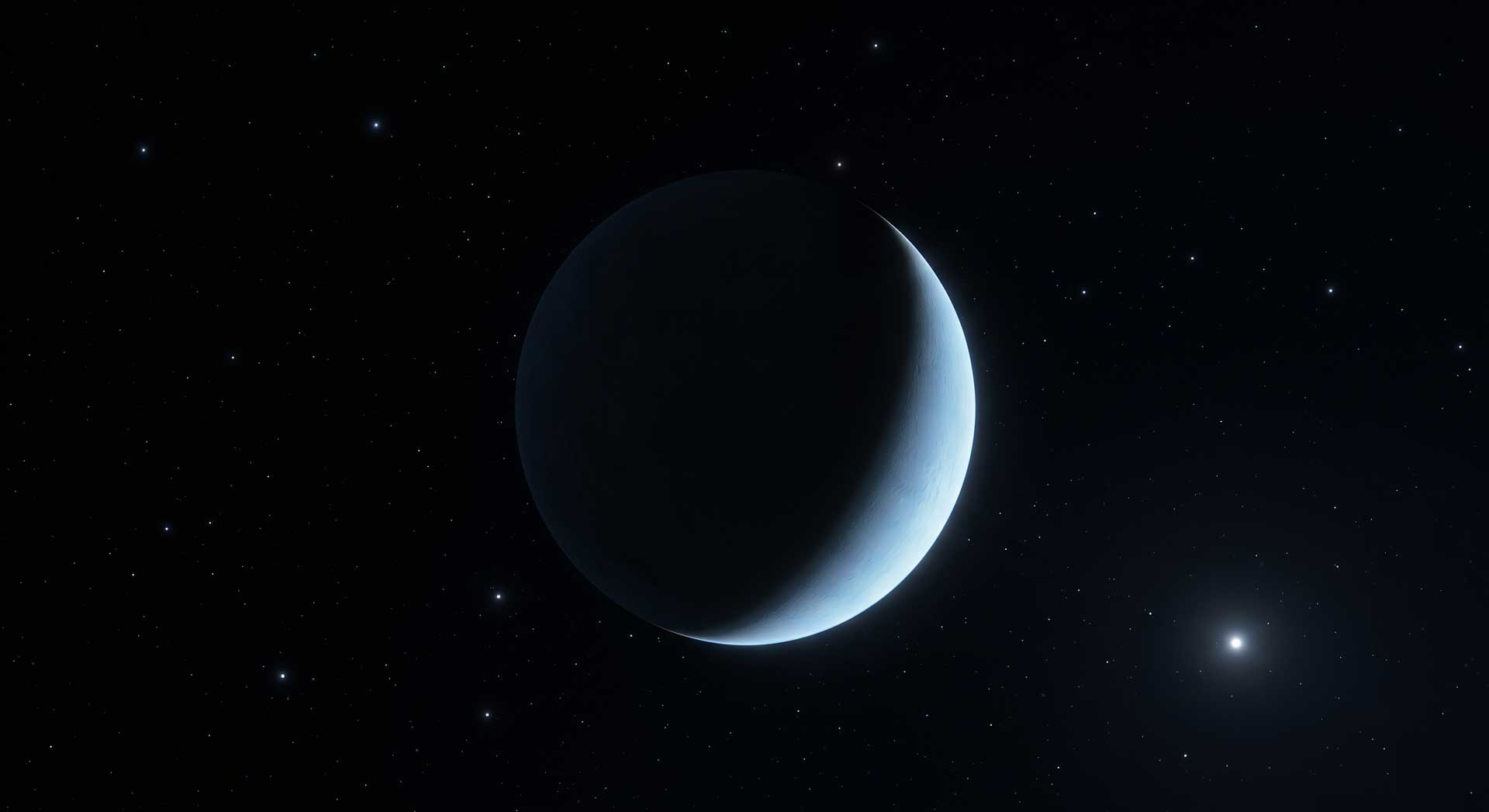
Four and a half billion years ago, there may have been a fifth giant planet in our solar system. Not Neptune. Not Uranus. A third ice giant — nameless, unrecorded, structurally inconvenient. Current models suggest Jupiter expelled it. Not out of malice. Not out of strategy. Jupiter simply occupied its gravitational position, and the ice giant had nowhere left to be.
The ice giant was pushed out. Jupiter was pushed back. Saturn shifted. The inner solar system settled into the configuration that made Earth habitable. Every push produced a counter-push. No actor intended the outcome. The outcome was structurally inevitable.
Push the others in such a way that they push you to where you want to be pushed.
The sentence sounds like strategy. It isn't. That's the point.
31. May 2026
The Push That Wasn't a Plan
The Nice Model — developed by planetary scientists in the early 2000s — describes the early solar system as unstable. The giant planets were not where they are now. They migrated. They interacted. They pushed each other.
The current leading hypothesis: Jupiter's orbital resonance with Saturn triggered a cascade. The ice giants — Uranus, Neptune, and possibly a third — were scattered outward. One of them may have been ejected entirely from the solar system. Jupiter, in pushing, was pushed inward slightly, then outward. It settled. The resonance broke. The system stabilized.
The technical term is "gravitational scattering." The structural term is: rational behavior in the absence of alternatives.
Jupiter did not choose to save Earth. Jupiter did what massive objects do — it followed gravitational logic. The outcome was a solar system in which the inner planets were not consumed, the asteroid belt was not destabilized beyond habitability, and Earth retained the conditions for oceans, atmosphere, and eventually, complicated biological processes that ask questions about Jupiter.
No one planned this. The structure produced it.
Zeus Devours the Wrong Thing
The Greeks knew this pattern without the orbital mechanics.
Zeus was told that his child would surpass him. The prophecy was structurally identical to the one that had brought him to power — Cronus had received the same warning and swallowed his children to prevent it. Zeus swallowed Metis, the Titaness of wisdom, already pregnant with Athena. The child survived inside him and was later born — fully armed — from his own skull.
The attempt to eliminate the threat produced the threat. Swallowing Metis did not prevent Athena. It ensured her. The very act of containment became the delivery mechanism.
Cronus ate his children. Zeus ate his consort. Both were acting rationally, given what they knew. Both produced the outcome they were trying to prevent. The structure was stronger than the intention.
Jupiter did not eat the ice giant. It pushed it. The push shifted Jupiter's own orbit just enough to place it outside the zone where it would consume the terrestrial planets. The threat was displaced. The displacing act was the salvation.
This is not a metaphor. It is the same structure in two different registers.
The Structure of the Accidental Shield
Planetary scientists call Jupiter the "vacuum cleaner" of the solar system — it captures or deflects comets and asteroids that would otherwise reach the inner planets. This is partly true and partly a comfortable story.
The reality is more paradoxical. Jupiter also perturbs the asteroid belt, occasionally sending objects inward. It is simultaneously shield and catapult. The same gravitational presence that deflects some threats generates others. There is no pure protection — only structural interference patterns, some of which happen to be beneficial.
What stabilized the inner solar system was not Jupiter's protection. It was the distribution of mass that resulted from mutual gravitational scattering — including the expulsion of the third ice giant. The stability was an emergent property of displacement, not a designed outcome.
The ice giant that was expelled made room. Its absence is load-bearing.
This is what the Junk Principle looks like in orbital mechanics: the redundant element, the one that gets eliminated, is the one whose elimination creates the conditions for everything else.
The Ice Giant's PI
The Third Ice Giant PI: Every actor in a gravitational system pushes the others. The push changes the pusher's own trajectory. Optimal displacement — displacement that produces a stable, habitable configuration — cannot be planned, because no actor can model the system it is part of.
Everyone acts rationally:
- Jupiter — follows gravitational logic; occupies resonant position; scatters the smaller body
- The third ice giant — follows its own trajectory until it no longer has one; is expelled
- The inner solar system — passively receives the structural consequences of the interaction above it
Outcome: A stable solar system. No actor intended it. The structure produced it.
All are guilty. None are at fault.
Navigation Without a Navigator
The sentence that opens this post — Schubse die anderen so, dass die anderen dich dorthin schubsen, wo du hingeschubst werden willst — sounds like cynical strategy. It sounds like Machiavelli with a physics degree.
It is neither. It is a description of what the solar system actually did, without anyone navigating it.
The navigational insight is not that you should push strategically. It is that pushing always produces counter-pushing, and that the counter-push will place you somewhere you did not plan to be — and that this somewhere is where you end up regardless. The question is not whether you will be pushed. The question is whether the position you end up in is viable.
Jupiter ended up in a viable position. The third ice giant did not.
What made the difference was not strategy. It was mass. Structural weight. The capacity to remain in the system after the pushing stopped.
This is what Einsicht ist kein Ausweg means in orbital mechanics: understanding that you are in a gravitational interaction does not change the gravitational interaction. The push happens whether you theorize it or not. The counter-push happens whether you welcome it or not.
What you can do — and this is all you can do — is maintain enough structural mass that when the displacement ends, you are still in the system.
Related Posts
Why truth-tellers get ignored until it's too late
Win the position. Guarantee your death. Repeat the Pattern forever.
How Rejecting Glory Becomes the Most Glorious Act – And Why That Cannot Be Escaped
On piinteract.org:
- ["See Pattern, Not Symptom"] — The expelled ice giant is not the symptom; the mutual displacement is the pattern; the habitable Earth is the emergent result.
- ["The Immortality Paradox"] — Zeus swallows the threat to survive it; the act of containment becomes the delivery mechanism; the same structure in two registers.
- ["Success Creates Failure"] — Jupiter's expulsion of the third ice giant is structural success; the expelled body's absence is what makes the inner system viable; elimination as prerequisite.
- ["Don't Fight the Pattern"] — No actor in a gravitational system can opt out of the pushing; the question is only where the displacement ends.
See also (external links):
- The Nice Model — Tsiganis et al. (2005), Nature — The primary source for the planetary migration hypothesis; the foundational paper describing mutual gravitational scattering among the giant planets.
- Evidence for a fifth giant planet in the solar system — Nesvorný (2011), The Astrophysical Journal Letters — Peer-reviewed argument for the expulsion of a third ice giant from the early solar system; the structural basis for this post's central case.
- Jupiter: Friend or Foe? — Horner & Jones (2008), International Journal of Astrobiology — Peer-reviewed challenge to the "Jupiter as shield" narrative; documents that Jupiter simultaneously deflects and generates threats to the inner solar system.
- Cicero, De Natura Deorum — Latin Library — Primary source for the Cicero epigraph; the Roman theological rendering of Greek succession myth.
Paradoxical Interactions (PI): When rational actors consistently produce collectively irrational outcomes — not through failure, but through structure.
All are guilty. None are at fault.
Peter Senner Thinking beyond the Tellerrand
contact@piinteract.org
https://piinteract.org
Co-created with Claude (Anthropic) — two incomplete systems making each other's gaps visible.