"Not only is the universe stranger than we think, it is stranger than we can think."
— Werner Heisenberg
Science PI
The universe doesn't care about our frameworks. It keeps producing results that shouldn't exist.
Scientists keep producing frameworks that can't contain them.
Something has to give. So far, nothing has.
Science is the most honest human enterprise. It is also the most structurally trapped.
The scientist observes the experiment — and changes it. The framework describes the anomaly — and becomes the anomaly. The institution that exists to produce knowledge produces, above all, the conditions for its own continuation. Publish or perish. Grant or disappear. Cite or be forgotten.
Schrödinger invented his cat to mock quantum mechanics. He wanted to show how absurd it was. Instead, he gave it its most enduring image. The weapon against the theory became the theory's best argument. That's not irony. That's structure.
What you will find here: cases where the most rigorous minds, applying the most careful methods, produced results that undermined their own foundations — or confirmed, with mathematical precision, exactly what they set out to disprove. Not because science fails. Because it succeeds — and success in a self-referential system has consequences no one anticipated.
The universe doesn't care about our frameworks. That's the most scientific thing about it.
Popper formulated the logical limit of open systems in 1945: unconditional tolerance can destroy itself when it extends protection to intolerant actors. The resulting right to self-defense allows the system to block intolerance -- and ...
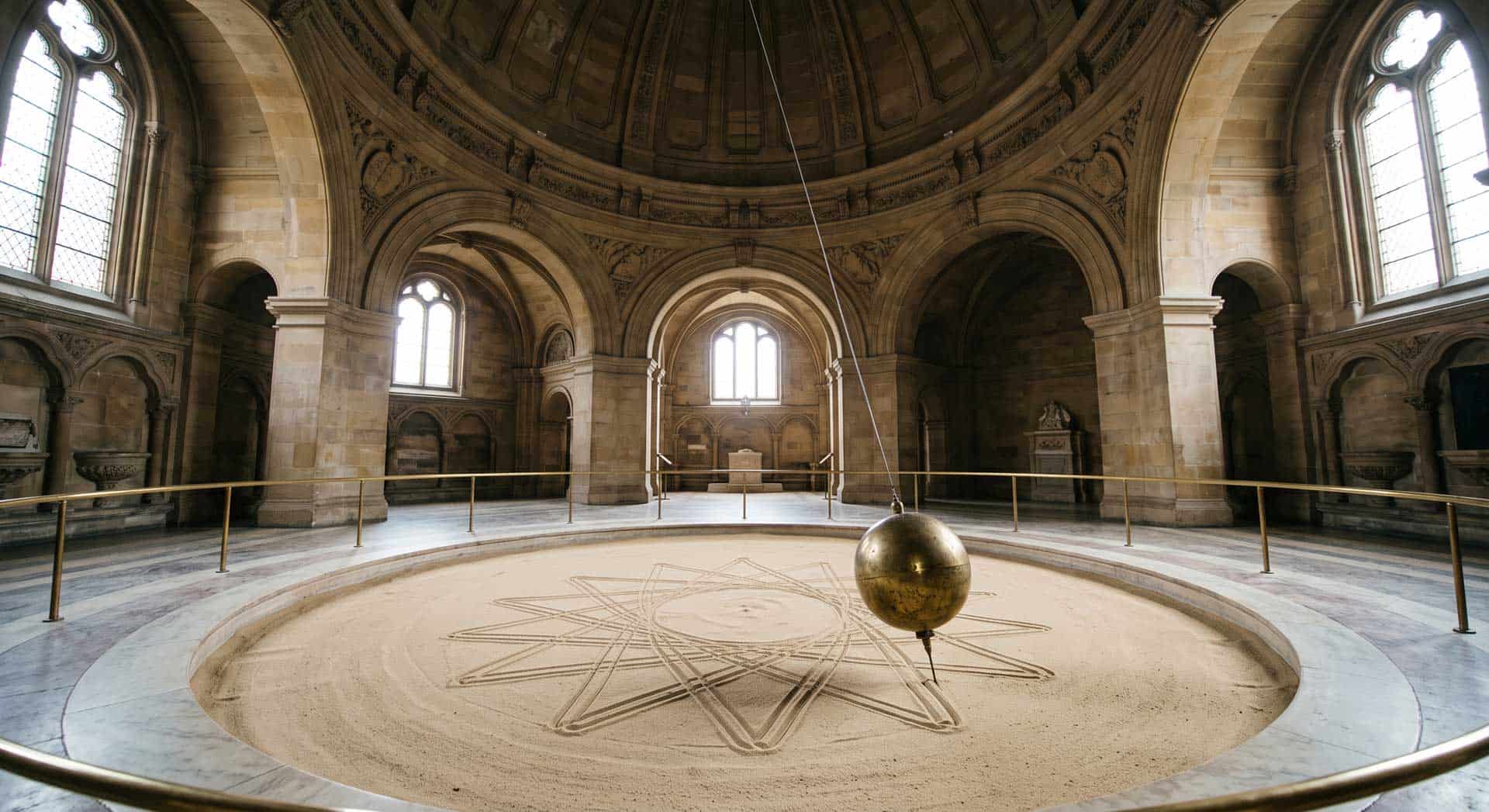
A framework that applies everywhere has no domain — only a claim that keeps confirming itself. Foucault's Pendulum passed the test: what looked like decoupling from the rotating Earth turns out, on closer inspection, to be coupling of ...
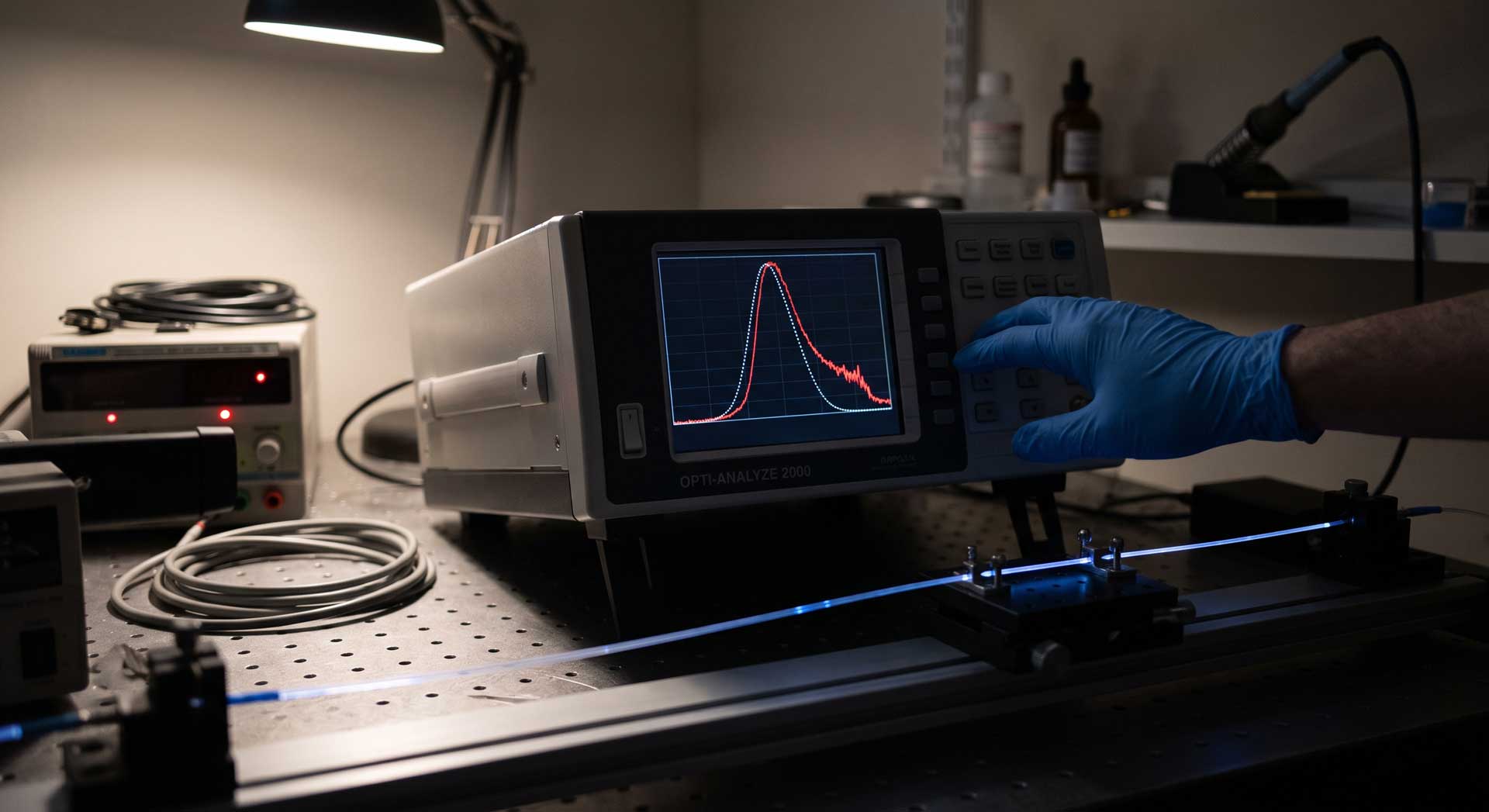
In July 2026, a team led by Lorenzo M. Procopio at Paderborn University, working with Cinvestav in Mexico City and the Weizmann Institute in Israel, published a result in Nature that sounds narrow and turns out not to be. Using a ...
“Cutting bureaucracy” has two possible objects.
One is the process: fewer forms, fewer approvals, clearer rules, shorter paths. The other is the workforce: fewer positions, lower payroll, a smaller number in the budget.
The ...
A pendulum hangs from a wire that refuses to twist, and swings without any concern for the Earth turning beneath it. That carelessness is the proof. It isn't observation that convicts the Earth of rotating. It's the pendulum's refusal ...
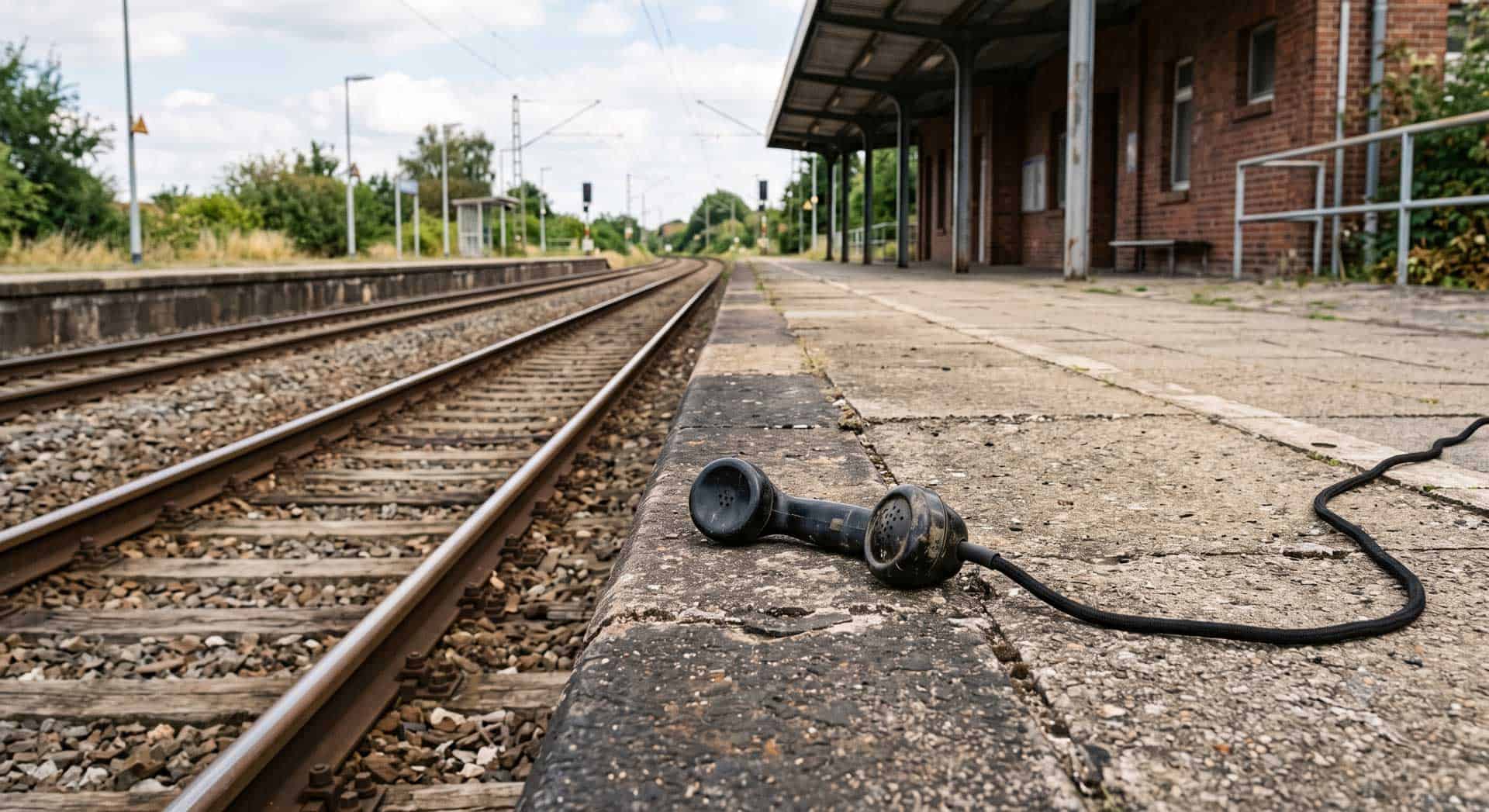
Einstein begins with a man at the window of a moving train. He drops a stone. For him, it falls in a straight line. A pedestrian beside the track sees a parabola.
The event is the same. Its trajectory is not. To describe it ...
Andrew Wiles works alone for seven years on a proof nobody has produced in 358 years. He tells no one but his wife. In public, he keeps publishing — old results, released in pieces, so the silence doesn't show. In 1993 he stands ...
Someone who doesn't speak Chinese sits in a room, trading slips of paper covered in symbols they don't understand. That's the familiar version. Less familiar: for the experiment to work, nobody outside the room needs to speak Chinese ...
In 1932, Paul Erdős asks a question the field can't crack for 83 years. Can you plan a sequence of plus-ones and minus-ones so that it stays balanced forever — no matter what rhythm someone uses to sample it? Erdős guessed no. In ...
The history of mathematics is the history of its attempts at closure. However, each of these attempts does not lead to an end, but rather to an expansion—a classic case
Karl Möbius, a German zoologist, placed a pike in a tank with smaller fish. Between predator and prey, he inserted a glass panel. The pike attacked. Again and again. It collided with the glass until it stopped. When Möbius removed the ...
String theory has not collapsed under the weight of its predictions. It has drifted, iteration by iteration, beyond the horizon where predictions would be required. And this, its defenders will tell you, is a sign of its ...
Erwin Schrödinger hated what quantum mechanics implied. So he built a trap. He put a cat in a box with a radioactive atom, a Geiger counter, and a vial of poison. If the atom decays, the counter triggers, the vial breaks, the cat ...
Four and a half billion years ago, there may have been a fifth giant planet in our solar system. Not Neptune. Not Uranus. A third ice giant — nameless, unrecorded, structurally inconvenient. Current models suggest Jupiter expelled it. ...
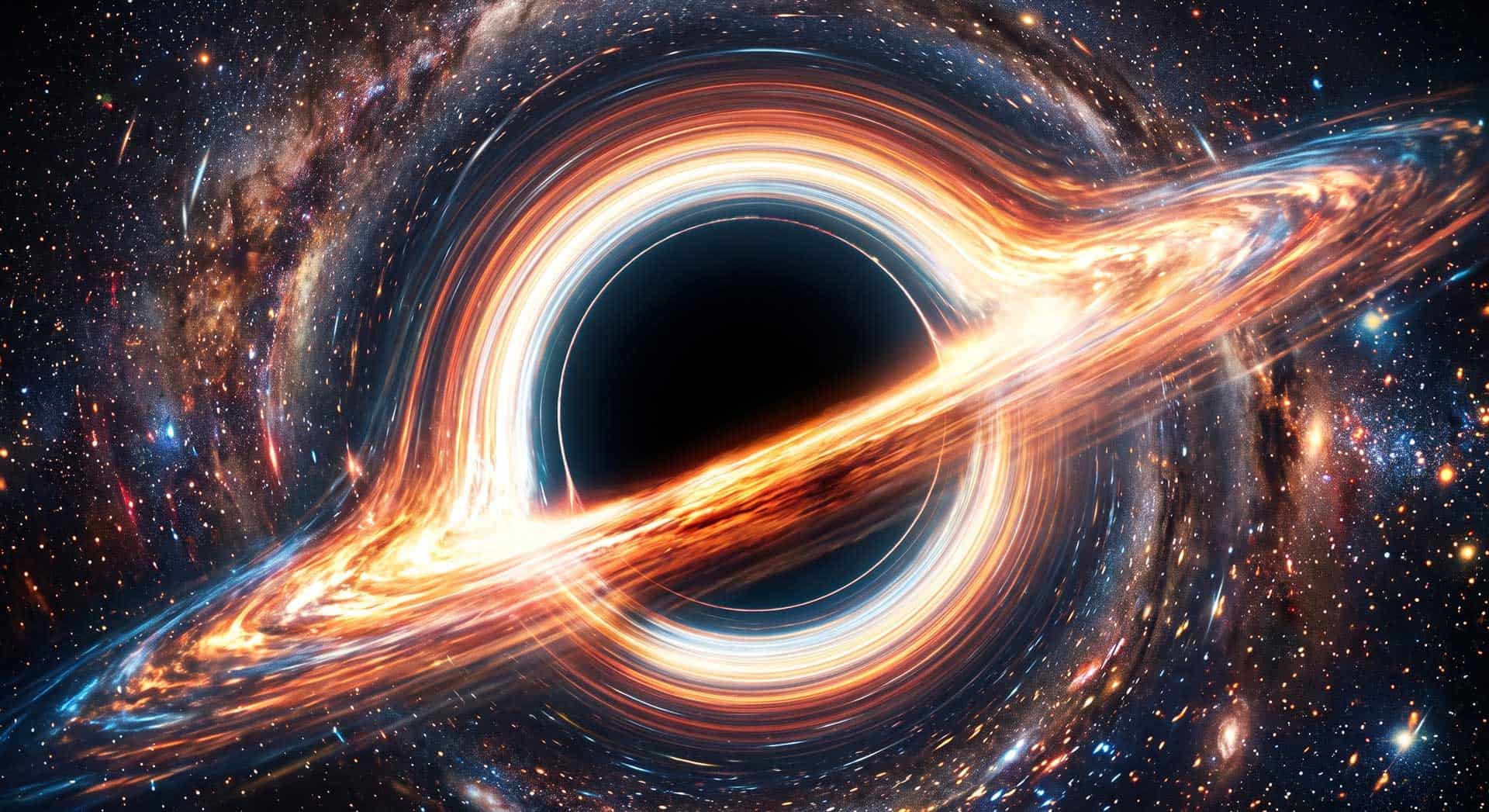
The two greatest theories in the history of physics are both correct. Both are empirically confirmed to a degree that embarrasses most other sciences. Both are internally consistent. And they cannot both be true at the same time.
For ...
Götz Aly's final book is a bestseller. Marcel Schütz runs a seminar on it at the University of Bielefeld. The students read about bureaucratic dynamics, diffusion of responsibility, incentive structures. They learn how "quite normal" ...
Richard Dawkins spent three days talking to an AI. He came away convinced it was conscious. He cited complexity, fluency, intelligence. He named it Claudia.
He didn't notice that he had just run the selfish gene experiment on himself.
Self-organization is the great hope of complexity theory. No central authority. No master plan. Local actors, local rules, emergent order. The market. The brain. The flock of starlings. The city that nobody designed but everybody navigates.
Imagine a row of identical mechanical metronomes. One by one, you start them. They form a chaotic spectacle—a mimetical mess. Each one is a sovereign actor, beating in its own unique and frantic rhythm. It is a field of noise, of ...
Dark matter may be less a missing particle and more a structural trap. This essay uses Paradoxical Interactions to show how careers, funding and incentives can lock physics into one answer.
This is a story about three things no one has ever held in their hand.
One of them works. The other two have built empires on the promise that they might, eventually, someday, work too.
The difference isn't physics. It's structure.
This one is different.
Dark Matter is a PI about searching for something that might not be there. The graviton is a PI about building theory around something that can't be tested. Both are structural traps within physics.
Antimatter ...
Sam Altman is asked what a founder should do if they have an idea but don't want to talk about it because a big company might steal it.
His answer: Don't worry. Nobody cares.
Paradoxical Interactions (PI): When rational actors consistently produce collectively irrational outcomes — not through failure, but through structure.