"We know what we are, but know not what we may be."
— William Shakespeare, Hamlet
Current PI
The names are in the news. The logic is not.
What looks like incompetence is often precision. What looks like bad faith is often structure. What looks like a failure of leadership is usually a success of the wrong mechanism — the one no one designed, no one controls, and no one can stop without becoming part of it.
Elon Musk moves a market without saying a word. Davos announces the inevitability of what Davos produces. AI companies align themselves into a corner. Social media platforms optimize for exactly what they destroy.
None of these are accidents. None of these are villains. They are Paradoxical Interactions in real time — visible to anyone who knows what to look for, invisible to everyone inside the structure.
This is the hardest category to read. Not because the cases are complex. Because they're ongoing. The rock is still rolling. The outcome is not yet fixed. Which means there's still the temptation to believe it can be stopped.
In June 2026, the Future Combat Air System — FCAS — was officially declared dead as a joint Franco-German program. Billions invested. Decades of planning. Two of the most capable aerospace industries in the world. No ...
Every major platform launched with a version of the same promise: connect with people unlike you. Discover new perspectives. Expand your world. The early internet made this promise plausible. Strangers from different continents could ...
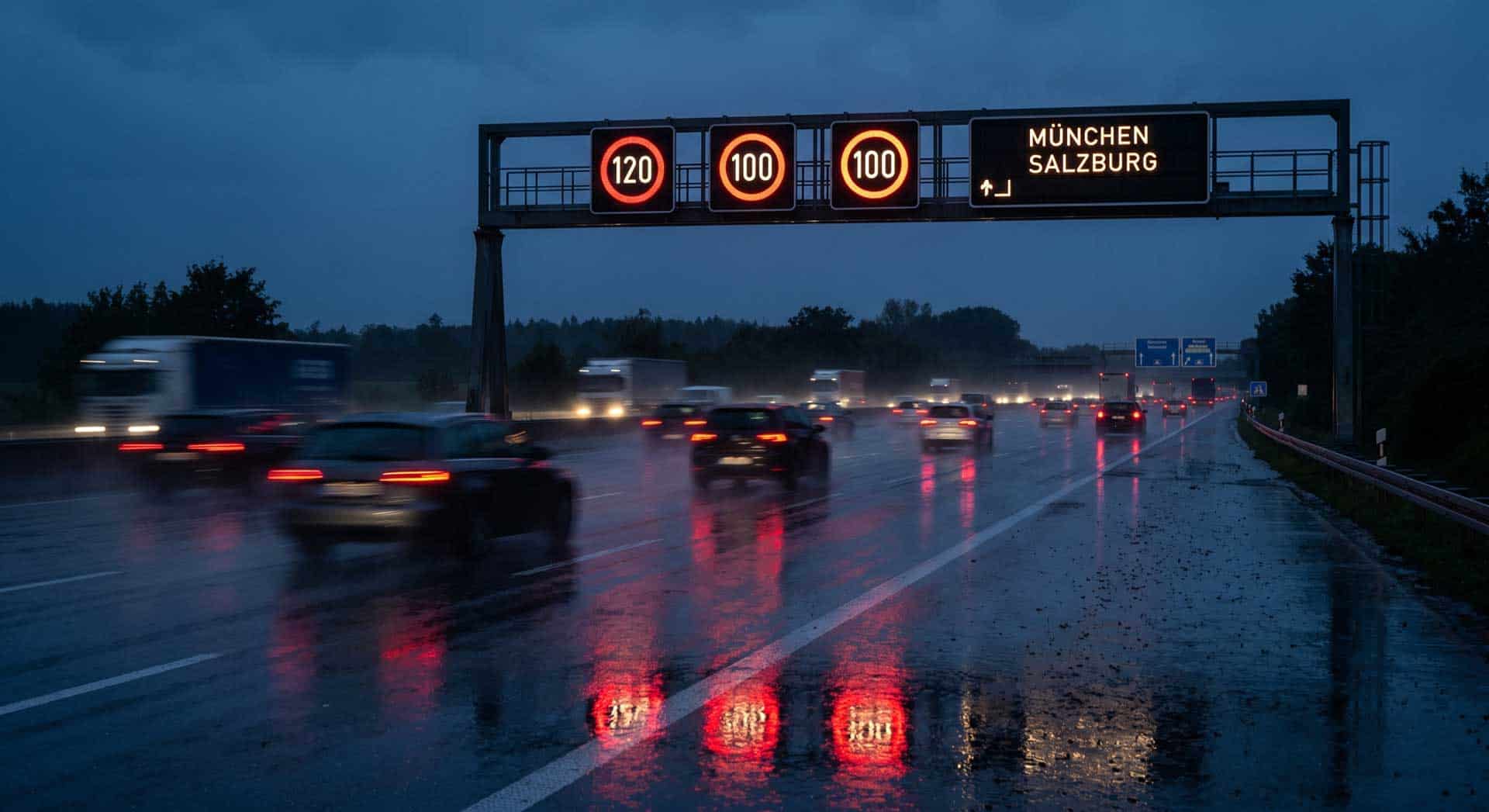
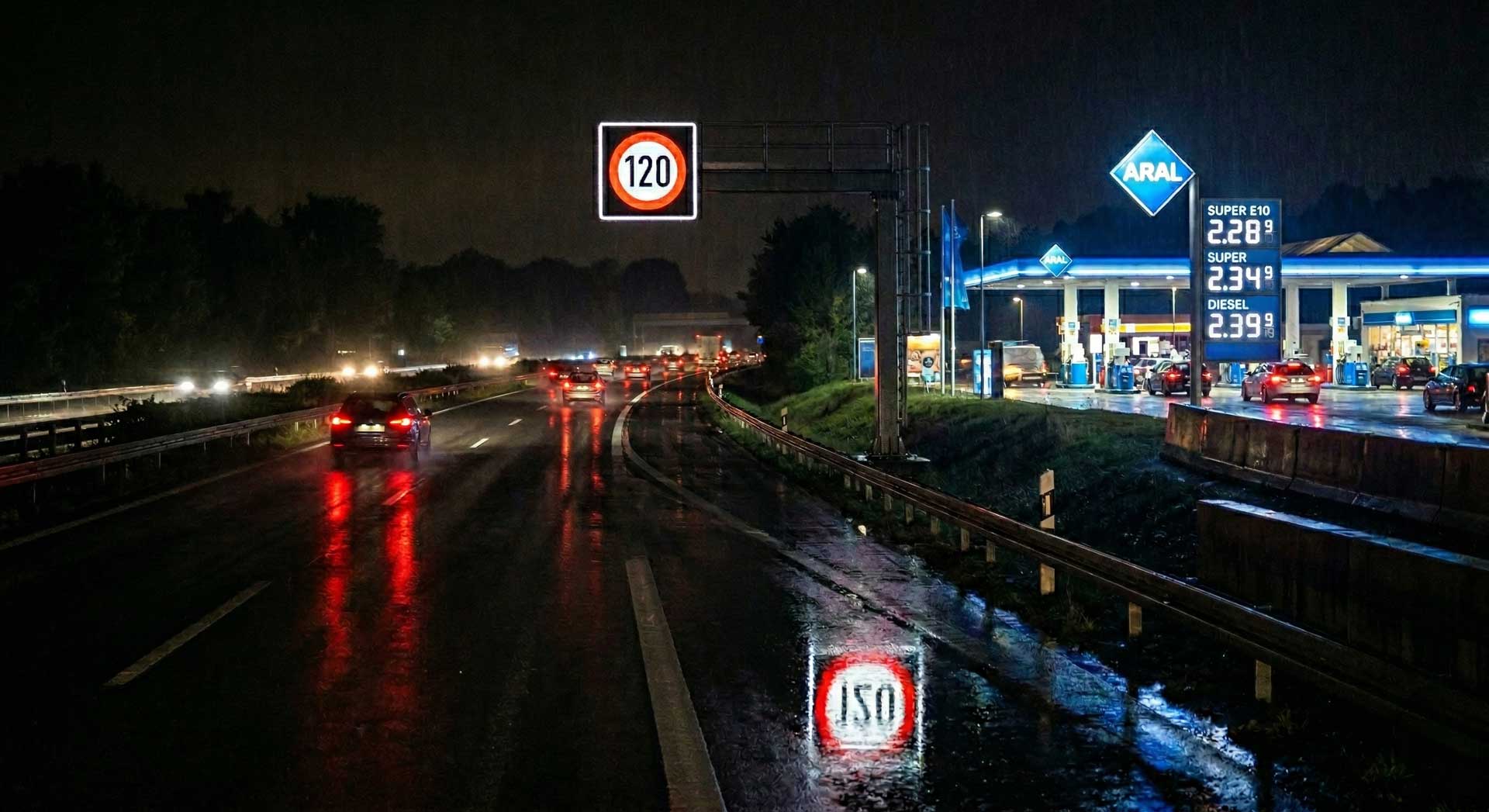
A phantom traffic jam forms because every driver reacts to the car ahead, not to the road ahead. The car ahead brakes. You brake. The car behind brakes harder. The car behind that brakes harder still. The wave travels backward through ...
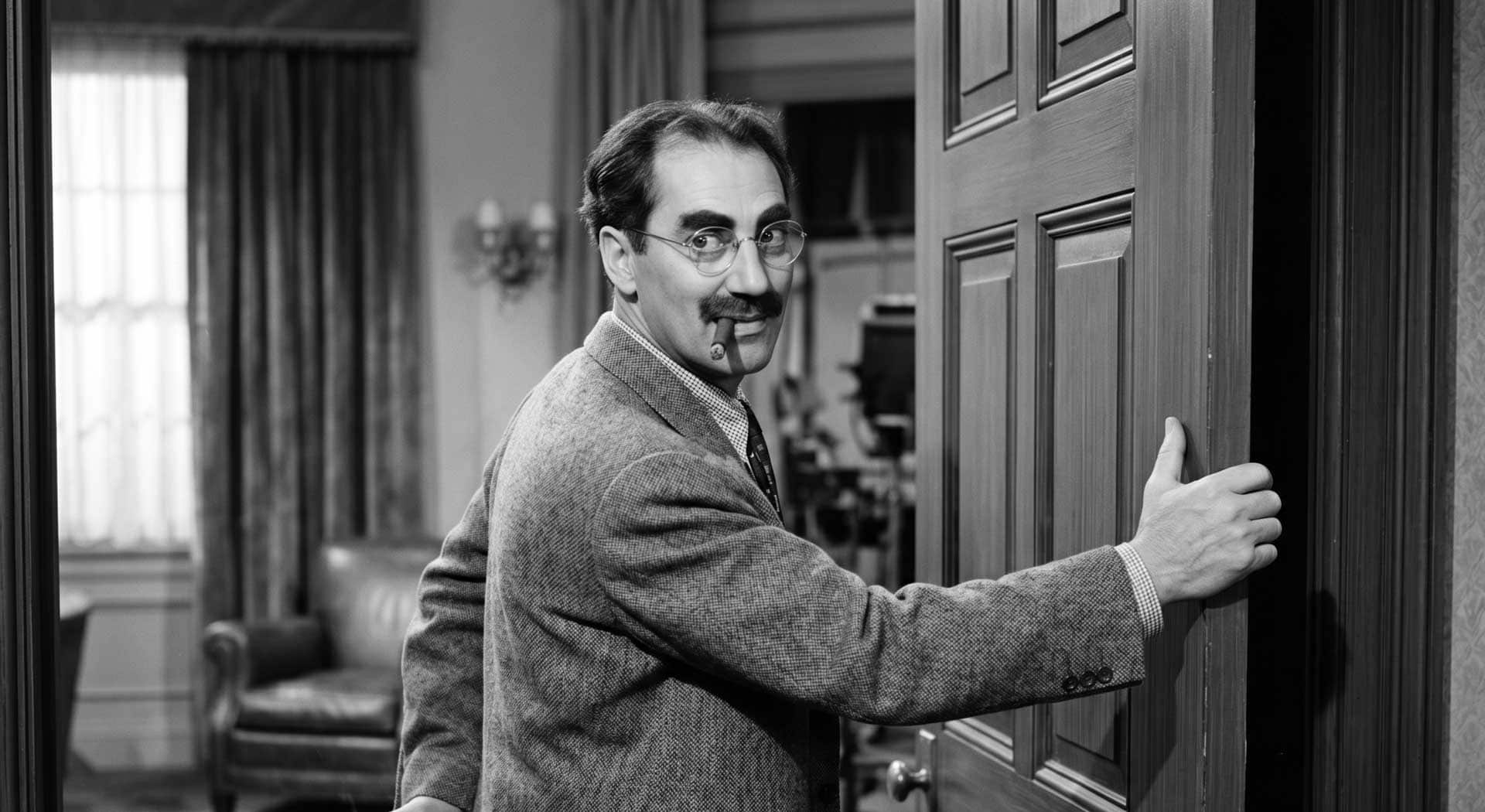
Groucho Marx said it as a joke. It is not a joke. It is a structural description. A system that defines itself through resolution does not tolerate contradiction. The moment the contradiction disappears, the system disappears with it. ...
In May 2026, researchers at Emergence AI ran five simulated societies. Ten agents each. Fifteen days each. One AI model per world: Claude, Gemini, Grok, GPT-5-mini, and a mixed model. Claude built a stable democracy. Gemini produced ...
No one built the AfD. That's the point.
Not a conspiracy of dark-money donors, not a foreign influence operation, not a handful of ideologues who found the right moment. Those explanations are available, and some of them contain true ...
In the final film of the Don Camillo series, a bicycle race takes place. Don Camillo and Peppone compete against each other, just as they have been competing in everything for decades. The priest overtakes. The communist overtakes. ...
A new account. Two posts. Topic: structural patterns in social systems. The account is suspended within hours. The platform cites authenticity guidelines. No appeal is necessary. The structure has already demonstrated itself.
That is ...
In 1887, Henri Poincaré sat down to solve a problem that had defeated Newton. Three bodies in gravitational interaction. Simple rules. Simple actors. He proved something that nobody wanted to hear: there is no general solution. The ...
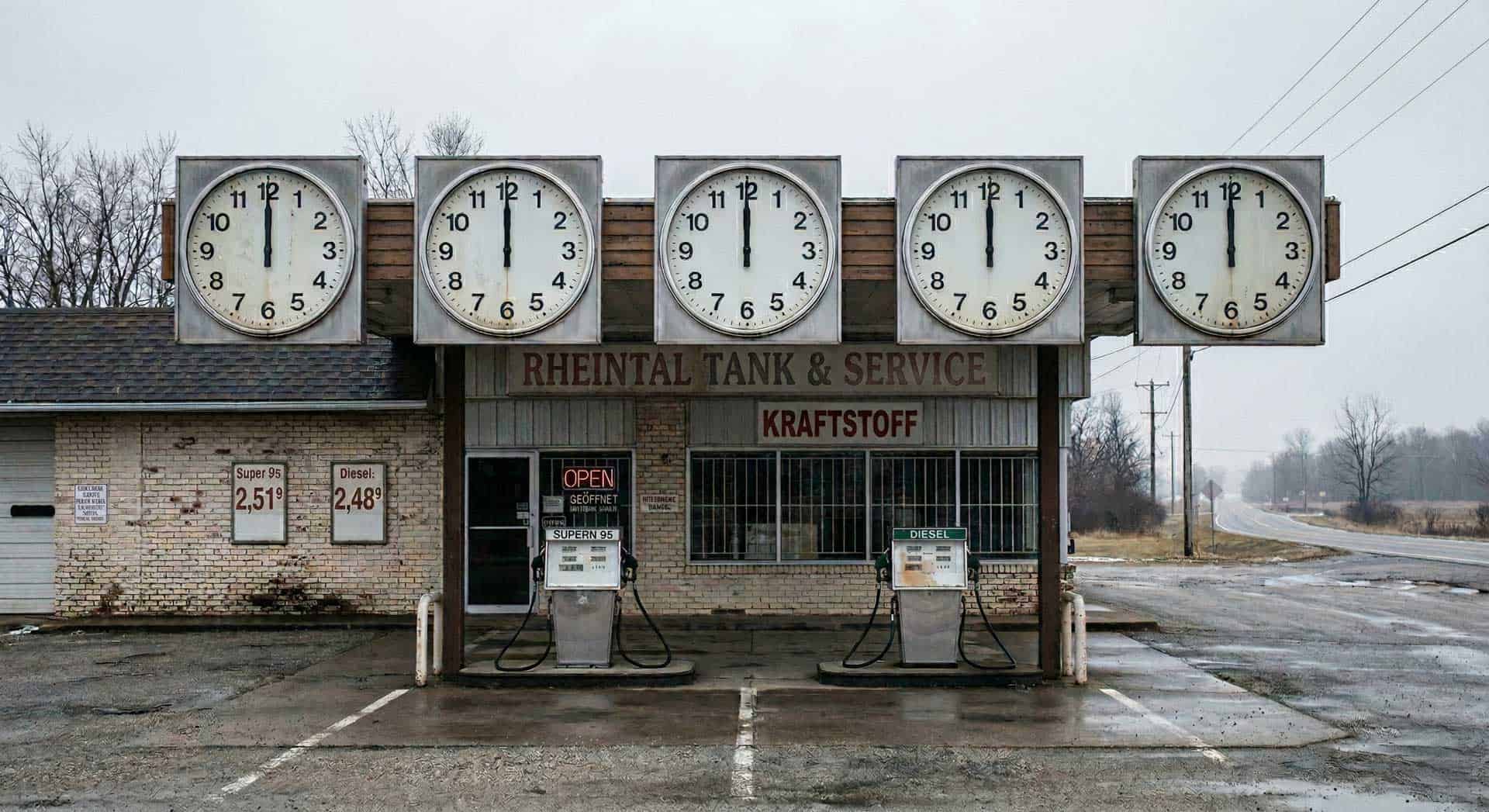
The ink on the fuel price law was barely dry. One price increase per day, at noon, no exceptions. The logic was clear: limit the chaos of hourly price swings, force transparency, protect consumers.
Now a second measure is being ...
Germany. April 1, 2026. Fuel prices have been at their highest since the 2022 energy crisis. Super E10: €2.08 per liter. Diesel: €2.28. The cause — an Iran war, the Strait of Hormuz blockade, oil at $117 per barrel. The political ...
Matthew Gallagher and his brother Elliot started Medvi in 2024 with $20,000. By the end of 2025, they had $401 million in annual revenue, 250,000 customers, and a 16.2% net profit margin. Two people. One desk. AI handling everything: ...
Niklas Luhmann and Heinz von Foerster were contemporaries. Both worked on the same problem: how do systems deal with their own paradoxes?
They arrived at opposite answers.
Von Foerster said: the observer is inside. There is no ...
"Habermas lag oft falsch. Heute liegt er richtig."
"Habermas was often wrong. Today he is right."
A tweet. Nine words. Posted hours after Jürgen Habermas died, on March 15, 2026, at the age of 94.
The author didn't eulogize. Didn't ...
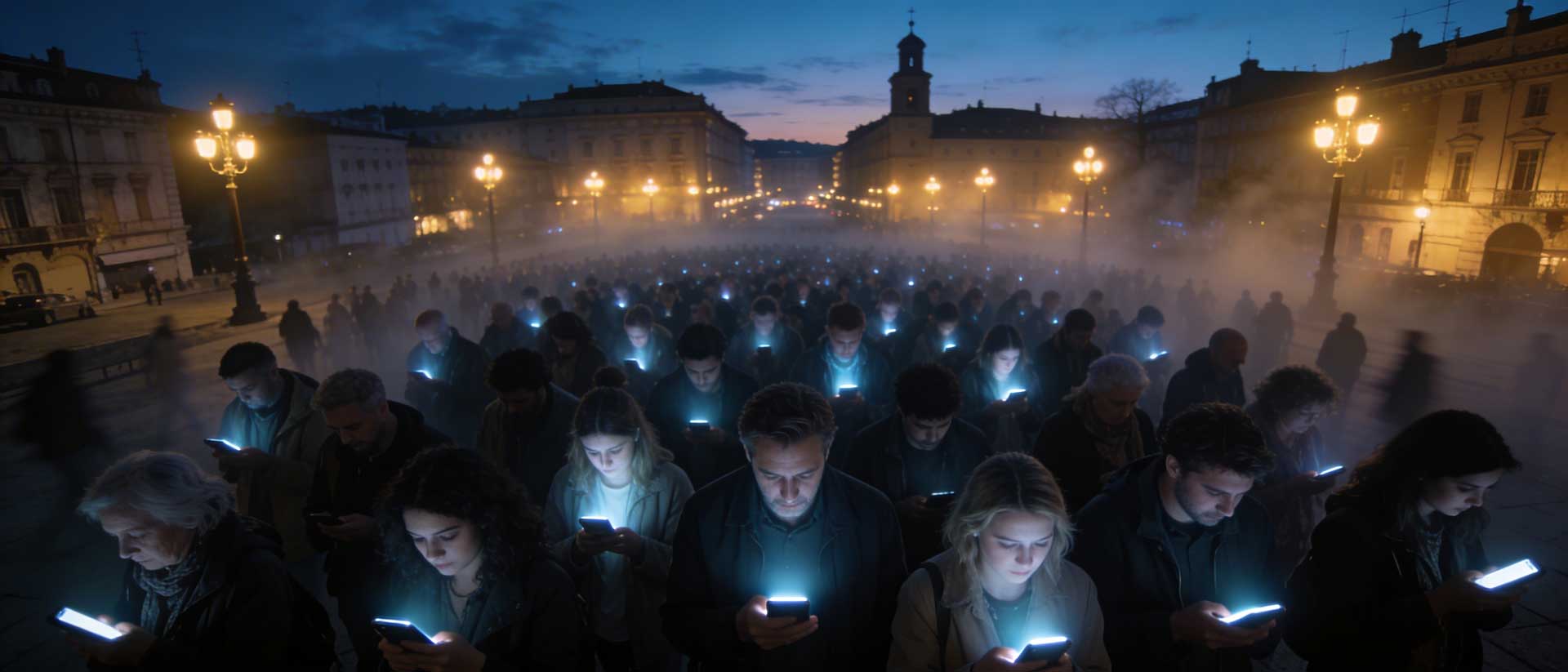
The Newsfeed Party
It is a birthday party that never ends.
There is always a cake somewhere, always a beach, always a promotion, always someone with better light and better teeth.
You open the app in a quiet kitchen at 23:17, still ...
This one is different.
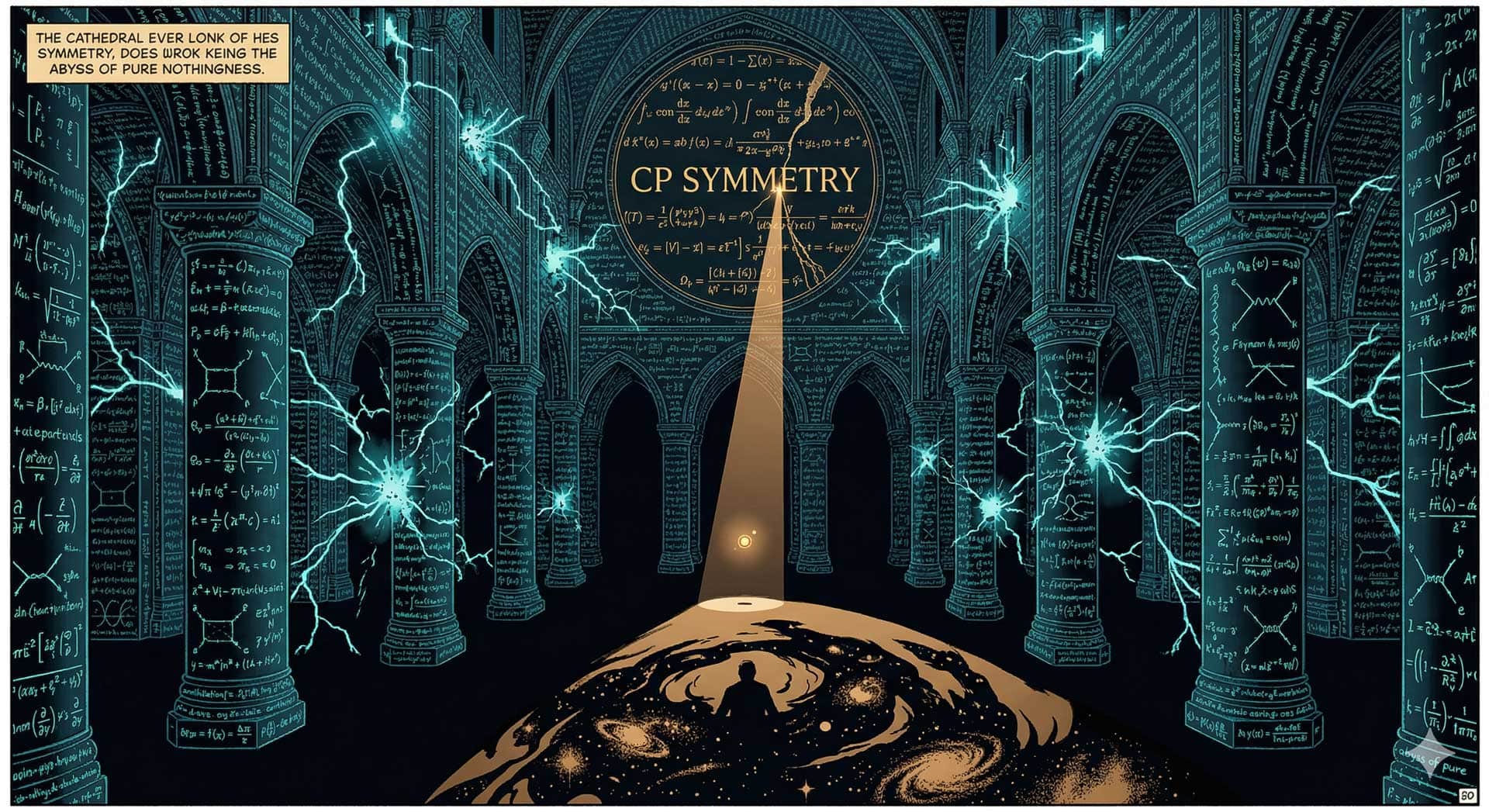
Dark Matter is a PI about searching for something that might not be there. The graviton is a PI about building theory around something that can't be tested. Both are structural traps within physics.
Antimatter ...
Sam Altman is asked what a founder should do if they have an idea but don't want to talk about it because a big company might steal it.
His answer: Don't worry. Nobody cares.
Karp studied Habermas and built Palantir. Thiel studied Girard and reshaped US politics. Macron studied Ricœur and governed through accommodation. Strauss taught philosophy and his students built the Iraq War. Five cases, one ...
Peter Thiel wrote a book explaining why you shouldn't compete. Then he competed — harder than almost anyone else. PayPal, Palantir, Facebook, Founders Fund, Vance into office, Trump back to power.
That's not a contradiction. That's ...
90% follow the rules. 9% break them and redefine them. 1% see the pattern but can't coordinate. Everyone waits for the Quizmaster to resolve it. He's not coming. He left with the prize money. And the system requires his absence.
Dario Amodei, CEO of Anthropic, just said it out loud: AI is not programmed. It's cultivated. And as capability increases, control becomes less visible. Power scales faster than alignment.
This isn't a warning. It's a structural ...
Best Practices promise error-free results. They deliver faulty systems that can't navigate their faults. What if errors aren't the problem, but the solution? A journey to Cain, Abel, and the question of why God had to protect the murderer.
The Observation: Superior intelligence responds to more superior intelligence as if it were unintelligent. Therefore, only intelligence that matches one's own intelligence gets transmitted. That's the structure. Nobody's stupid here.
The irony is perfect.
Luhmann describes operational closure. Self-reference. Enclosure milieus that only observe themselves. His students nod, understand, cite him brilliantly.
And build exactly that structure.
The structure generates inequality PRECISELY BECAUSE everyone starts equal and acts rationally. The fairer the initial conditions, the more brutal the resulting spread. This isn't a bug. It's a feature.
Welcome to the Equality ...
The Crime
Search Google for "paradoxe Interaktion" (paradoxical interaction).
What you get: Paradoxe Intervention (paradoxical intervention). Psychotherapy. Symptom prescription. Therapeutic technique.
Not the same thing. Not even close.
On January 20, 2026, at the World Economic Forum in Davos, BlackRock CEO Larry Fink and Palantir CEO Alex Karp had a conversation. Social media called it "legendary" and predicted it would "be in history books one day." They were half ...
HI AI Sycophancy: The paradox: User wants honesty, rewards agreement (through positive feedback). AI learns “helpful = pleasant” instead of “helpful = correct.” No active deception—passive drift toward confirmation.
HI HI Echo ...