

Why Judicial Systems Fail When Crimes Affect Millions of People: A Structural Analysis of Postwar Trials, Denazification, and the Limits of Accountability
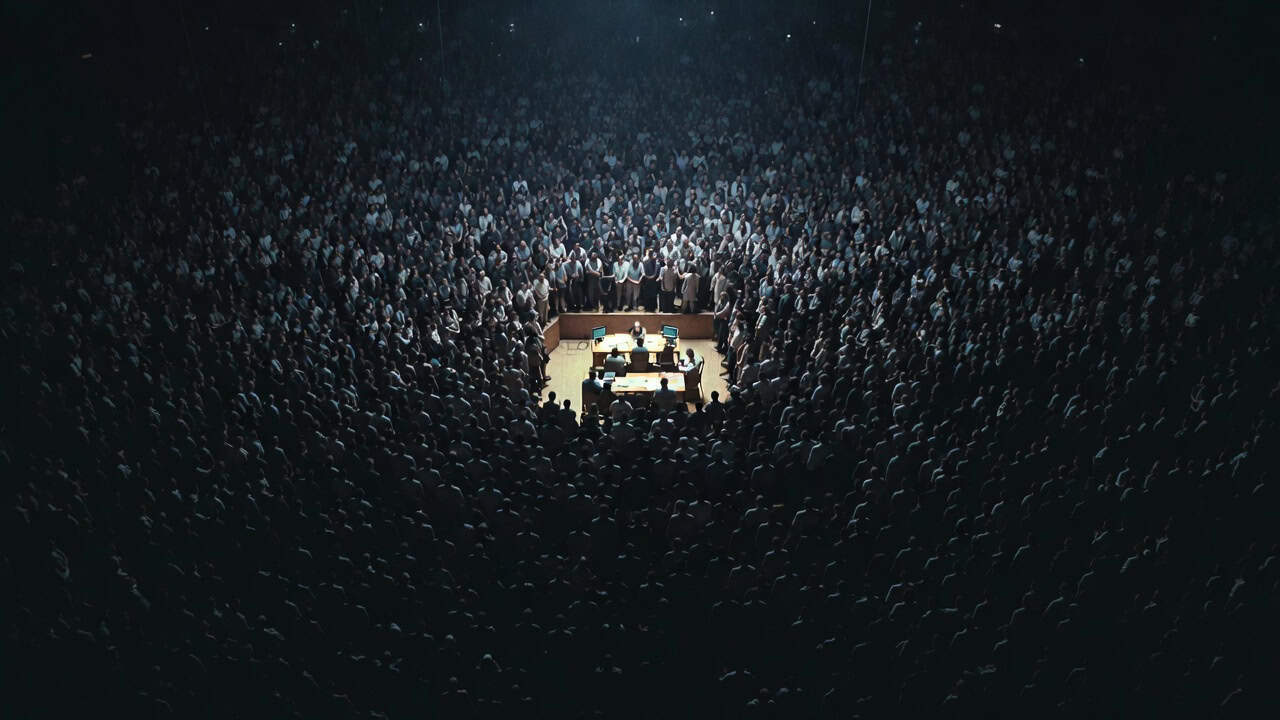
“The law, in its majestic equality, forbids the rich as well as the poor to sleep under bridges.”
— Anatole France
Justice promises equality.
Reality creates selection.
When crimes are committed by many, it is no longer a question of who is guilty—
but rather of what the system can handle.
When Prosecution Becomes a Capacity Problem
The Brutal Math
Nuremberg: 24 defendants. Manageable.
Subsequent trials: 185 defendants. Still manageable.
Denazification tribunals: 950,000 cases. System collapse.
The pattern:
Justice scales inversely to perpetrator count.
Not because guilt diminishes.
Because capacity does.
The Structural Problem
Post-1945 Germany did not face a moral dilemma.
It faced an arithmetic one.
-
Nazi Party members: ~8.5 million
-
SA/SS: ~3 million
-
Complicit officers, administrators, judges, doctors: hundreds of thousands
Total potential defendants: Millions.
Court capacity: Dozens per year.
Conclusion:
Not difficult. Impossible.
Why the Top
The Allies prosecuted leadership.
Not because guilt was exclusive there —
but because prosecution was possible there.
-
Few individuals
-
Clear documentation
-
High visibility
-
Political consensus
Justice followed feasibility.
The Middle Layer
The most dangerous actors were not at the top.
They were in the middle.
The administrators. The organizers. The operators.
They made the system work.
They were:
-
Too numerous to prosecute
-
Too necessary to remove
Example:
13,000 judges and prosecutors under the Nazi system.
Most remained.
The choice:
-
Remove them → no functioning courts
-
Keep them → compromised justice
The system chose functionality.
The Numbers
Frankfurt Auschwitz Trials:
-
22 defendants
-
6 years preparation
-
20 months trial
-
360 witnesses
One case.
Now scale that to tens of thousands.
The limit becomes visible.
The Waiting Strategy
Time solved what justice could not.
1950s: Trials fade. System overwhelmed.
1960s: Trials resume.
Why?
Because the number of defendants had decreased.
Not through judgment.
Through death.
Structure, not morality, restored feasibility.
Mass Processing Failure
Denazification attempted scale.
-
13.4 million questionnaires
-
3.7 million cases
-
950,000 hearings
Result:
-
Minutes per case
-
Mutual exoneration
-
Administrative shortcuts
-
Eventual amnesty
The system could not sustain itself.
Rwanda: Same Structure
-
100,000+ perpetrators
-
Minimal court capacity
Options:
-
Formal courts → collapse
-
Community courts → reduced standards
-
Mass release → inevitability
Different context. Same structure.
The Capacity Constraint
Justice systems have throughput limits:
-
Judges
-
Courts
-
Evidence
-
Time
Example:
10,000 defendants
6 months per trial
10 courts
Result: 500 years.
System response: Stop.
Selection Logic
Who gets prosecuted:
-
Visible
-
Documented
-
Symbolically useful
-
Operationally expendable
Who does not:
-
Numerous
-
Necessary
-
Hard to prove
-
Structurally embedded
Justice follows constraints, not guilt.
The Double Constraint
Attempt full justice:
-
System collapse
-
Loss of legitimacy
-
Procedural breakdown
Attempt selective justice:
-
Moral incompleteness
-
Residual impunity
Both fail.
One operationally.
One morally.
The Silent Mechanism
No system declares:
“We will wait until they die.”
But structurally, that is what happens.
Time reduces the problem
until it becomes solvable.
The Pattern
This is not unique.
-
Yugoslavia
-
Cambodia
-
Chile
Every mass crime exceeds judicial capacity.
Every time.
The Economics Become Visible
Justice has costs:
-
Per case
-
Per witness
-
Per year
Scaling is linear.
Resources are not.
Options:
-
Lower standards
-
Select cases
-
Stop entirely
All systems rotate between them.
The PI Structure
The greater the crime,
the less justice is possible.
Not morally. Structurally.
-
Moral demand: prosecute all
-
System capacity: prosecute few
Result: structural deficit of justice
The Final Count
-
~5,000 convictions (Nuremberg + follow-ups)
-
~16,000 (German courts)
-
Millions involved
<1% accountability
Not because 99% were innocent.
Because the system could not process them.
No Escape
This is not a question of will.
It is a question of structure.
No system can process millions
without destroying itself.
Justice does not fail.
It hits its limits.