

Why social media cannot be fixed — and why every attempt to fix it makes it worse.
"The social contract is nothing more or less than a vast conspiracy of human beings to lie to and humbug themselves and one another for the general Good."
— H.G. Wells
8. April 2026
The Setup
In 1887, Henri Poincaré sat down to solve a problem that had defeated Newton. Three bodies in gravitational interaction. Simple rules. Simple actors. He proved something that nobody wanted to hear: there is no general solution. The system is, in most configurations, fundamentally unpredictable. Small differences in starting conditions — errors smaller than the width of an atom — produce completely different trajectories over time.
He won a prize for this. The prize was for finding the solution. What he found was the proof that there is none.
Social media has three billion bodies. And the same structure.
The Two-Body Lie
Start with what works.
Two bodies in gravitational interaction: solvable. Newton did it. Perfect ellipses. Clockwork. The poster-child for Enlightenment rationalism — a universe that runs like a machine, predictable to the decimal point if you know the starting conditions.
The internet, circa 1995, was approximately this. Email: two parties, direct communication, no third-party dynamics. Forums: bounded communities with stable membership and shared norms. The physics was simple. The trajectories were, if not perfectly predictable, at least navigable.
Then came the third body.
Not a platform. Not an algorithm. The mechanism: attention as currency. The moment engagement could be measured, ranked, and rewarded, a third force entered every interaction. Not the speaker. Not the listener. The dynamic between them — now monetized, now optimized, now structural.
Two-body became three-body. Three-body became n-body.
The ellipses became chaos.
What the Algorithm Actually Optimizes For
Here is what every engineer at every platform will tell you, sincerely and correctly: we optimize for engagement. More time on platform. More clicks. More shares. More return visits.
Here is what nobody intended: engagement correlates with emotional arousal. Anger, fear, outrage, disgust — these produce more clicks than calm, measured, accurate content. Not because people are stupid. Because arousal is evolutionarily prior to reason. The algorithm didn't discover this. It converged on it, because the training signal — engagement — selected for it.
Every engineer acted rationally. Every optimization step was justified by data. Every A/B test pointed in the same direction.
The direction was toward the most reliable trigger of human attention: conflict.
No one decided this. No one wanted this. The structure produced it — through the rational behavior of everyone involved.
The N-Body PI
This is the structure:
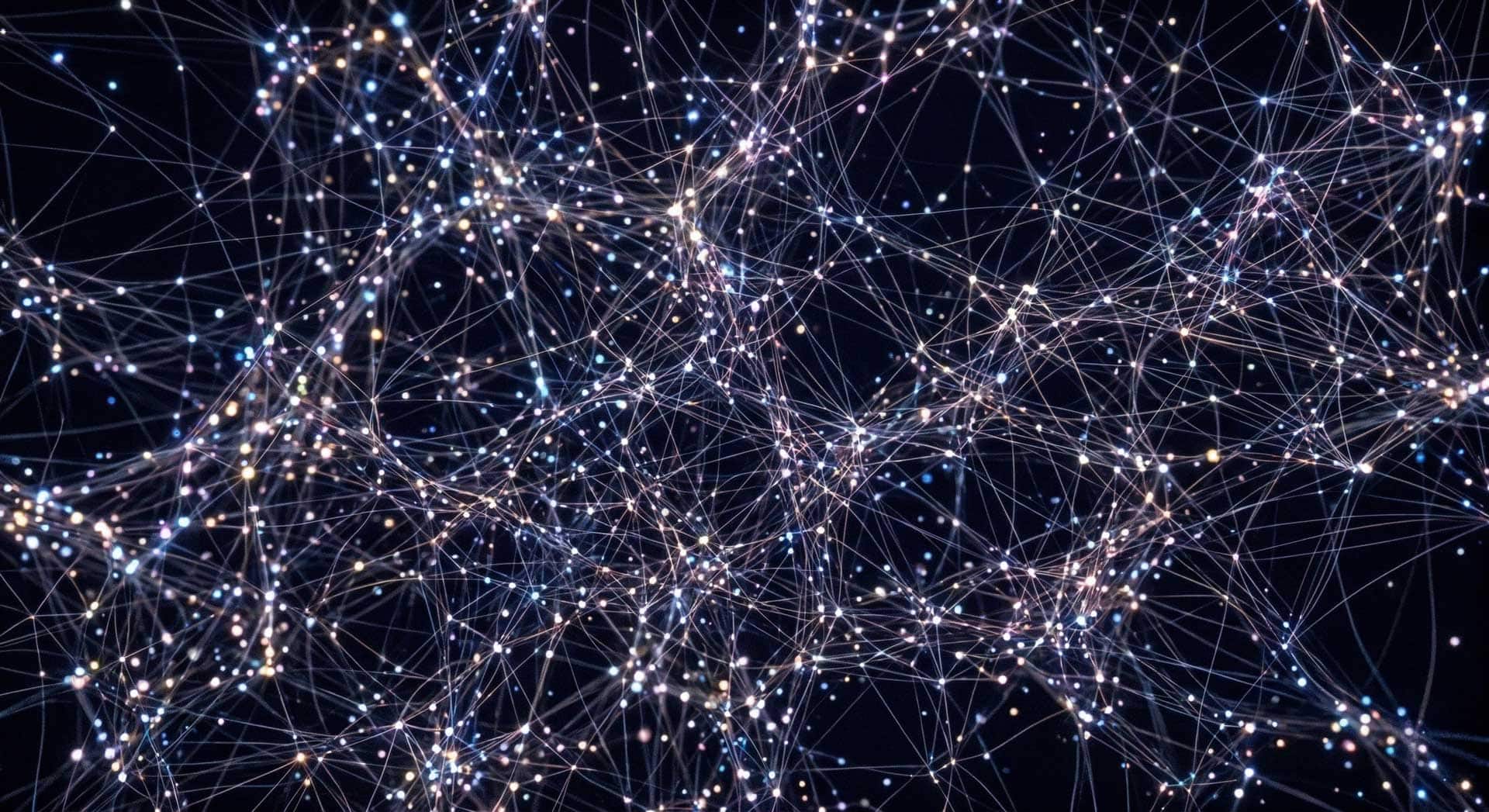
The Social Media PI: Millions of rational actors, each optimizing individually for attention, validation, and reach, interact through a platform that optimizes for engagement — producing a collective environment that none of them would have chosen and that none of them can exit without cost.
Everyone acts rationally:
- Users — share content that gets responses (rational: social reward)
- Creators — post what performs (rational: visibility, income)
- Platforms — optimize for engagement (rational: advertising revenue)
- Advertisers — follow attention (rational: return on investment)
- Regulators — demand accountability (rational: democratic pressure)
- Outcome — an environment structurally hostile to nuance, accuracy, and civic trust. Not because anyone failed. Because everyone succeeded.
All are guilty. None are at fault.
Why Every Fix Makes It Worse
The three-body problem has no general solution. That doesn't mean specific configurations aren't stable — the Lagrange points are stable. Three bodies can settle into predictable orbits under very specific conditions. But those conditions are fragile. Perturb them slightly, and the stability vanishes.
Every attempt to "fix" social media is a perturbation.
Content moderation: removes the most egregious content, shifts the dynamics, creates martyrdom effects, radicalizes the newly-banned audiences elsewhere. Rational response to a structural incentive.
Algorithmic transparency: surfaces the optimization function, allows actors to game it more efficiently. Rational response.
Fact-checking labels: trigger reactance, increase engagement with the labeled content through controversy. Rational response.
Chronological feeds: reduce engagement metrics, platforms revert or hybrid, users migrate to where the engagement is. Rational response.
Each intervention is rational. Each produces a counter-dynamic that partially or fully negates the intended effect. Because the system has too many bodies. Because every intervention is itself a new body in the system, creating new interactions, producing new dynamics that weren't predicted and couldn't have been.
This is not incompetence. This is the n-body problem applied to social systems.
The Accelerant
Poincaré's three bodies are passive. They don't learn. They don't model each other. They don't update their behavior based on observed outcomes.
Social media bodies do all of this.
The platform learns — continuously, from billions of interactions, in real time. It doesn't just respond to the system. It shapes it. It is simultaneously a body in the system and the gravitational field itself.
This is not a three-body problem that produces chaos. This is a three-body problem where one of the bodies rewrites the laws of physics mid-orbit — optimizing the rules toward the outcome that keeps all other bodies orbiting longest.
The chaos isn't a side effect. It's the product. An engaged user is a retained user. Retained users generate revenue. Chaos generates engagement.
The machine isn't broken. It works perfectly — for what it was actually built to do, once the training signal had its way with the intention.
Navigation, Not Solution
There is no Lagrange point for social media. No stable configuration that satisfies all actors simultaneously. This is not a solvable problem. It is a navigable one — barely, and with constant adjustment.
What navigation looks like:
Accept that you are a body in the system. Your presence changes the dynamics. Your absence changes them differently. Neither is neutral.
Recognize the feedback loops before they recognize you. What makes you share? What makes you angry? The structure is most effective when it's invisible.
Structural silence is information. The topics that generate no engagement are often more important than the ones that generate most. The algorithm doesn't suppress them through malice — through indifference. Same effect.
And the hardest: the people you disagree with most loudly are also rational actors responding to the same incentive structure. They are not the problem. They are, like you, the system producing itself.
All are guilty. None are at fault.
This doesn't mean nothing matters. It means the target of your frustration is the wrong target.
The Honest Conclusion
Poincaré didn't say the solar system was broken. He said it was chaotic — which is a structural property, not a failure. The planets still orbit. Life still exists. The chaos is bounded, for now, by initial conditions set four billion years ago.
Social media chaos is not bounded by initial conditions. It is actively amplified by systems that benefit from amplitude.
The question is not: can we fix social media?
The question is: can we survive a communication infrastructure that structurally rewards the most destabilizing content — at scale, in real time, with three billion users?
Poincaré didn't have an answer to that. Neither do we.
What we have is the proof that the question is being asked wrong.
Related Posts
Why truth-tellers get ignored until it's too late
When the CEO of an AI safety company tells you control is failing, believe him
The Mousetrap — Why asking AI how to align AI is the perfect paradox
On piinteract.org
- Anti-Practices — The structural patterns that reproduce the problem while claiming to solve it
- Examples: Society & Culture — Where the n-body dynamic appears beyond the feed
- Examples: Technology & AI — The same structure, different substrate
Paradoxical Interactions (PI): When rational actors consistently produce collectively irrational outcomes — not through failure, but through structure.
All are guilty. None are at fault.
Peter Senner Thinking beyond the Tellerrand
contact@piinteract.org
https://piinteract.org
Co-created with Claude (Anthropic) — two incomplete systems making each other's gaps visible.