

Why the most successful prophet in history was not a seer — and why that makes him more dangerous, not less.
“I have not sought to know what is unknowable, but only to observe what was already written.”
— Michel de Nostredame (attr.)
24. March 2026
Peter Senner co-created with Anthropic Claude
The Setup
Cassandra saw Troy burning. She said so. Loudly. Repeatedly. Nobody listened. The horse entered the city. Troy fell. Cassandra was right.
The horse stood on the beach afterward. Useless. So did she.
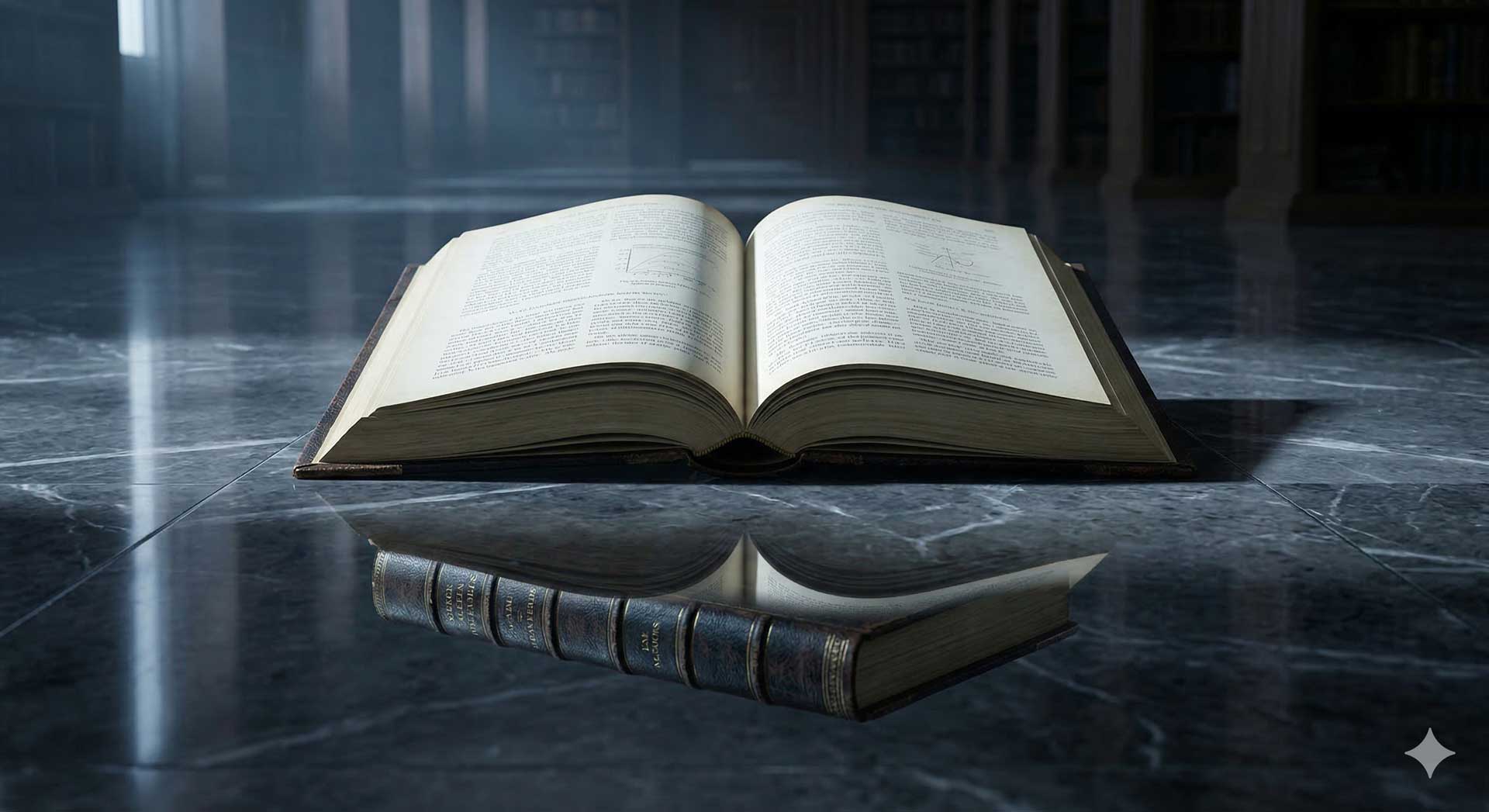
Nostradamus published his Centuries in 1555. More than 6,000 quatrains. He has been continuously in print for nearly five centuries. Every generation finds its own wars, its own tyrants, its own catastrophes in his verses. Napoleon was there. Hitler was there. 9/11 was there.
So was everything else.
The Structure Cassandra Missed
Cassandra's problem was not that she lacked credibility. Her problem was structural: one warning, one event, one outcome. Precision without redundancy. A single arrow that either hits or doesn't.
She hit. Troy still burned.
The structure of prophecy punishes precision. A precise prophecy has exactly one future to be measured against. If it comes true, the prophet is vindicated — after the catastrophe, too late for anyone. If it doesn't, the prophet is discredited. There is no third option.
Cassandra chose precision. She lost both ways.
Nostradamus chose something else. Not vagueness from laziness or mystification for profit. Something more interesting: structural intelligence about how prophecy survives.
A vague prophecy has no single future to be measured against. It has all futures. It cannot be falsified because it has not committed to anything falsifiable. It cannot be discredited because nothing specific was claimed. And in exchange for this unassailability, it offers something the reader desperately wants: a mirror in which to see their own catastrophe confirmed.
This is not charlatanism. It is applied logic.
The Law of Large Numbers
Nostradamus did not write one prophecy. He wrote 6,000.
This is not vanity. It is probability.
Against the backdrop of five centuries of human history — wars, famines, plagues, revolutions, collapses, discoveries — 6,000 vague quatrains will match something. Always. The law of large numbers makes this mathematically inevitable. The coverage is total. There is no catastrophe for which a Nostradamus verse cannot be found, interpreted, applied.
The exegetes do the rest. Each generation produces its own Nostradamus scholars, each finding their own confirmation, each publishing their own key to the Centuries. They are not deluded. They are rational: the texts are genuinely ambiguous, the pattern-matching is real, the satisfaction of fit is real.
The prophet provides the vessel. History fills it. Every time.
All are guilty. None are at fault.
The Nostradamus PI
This is the structure:
The Nostradamus PI: A body of sufficiently vague, sufficiently numerous predictions guarantees perpetual retrospective confirmation. No seer required. No future knowledge required. Only structural intelligence about how meaning gets assigned — after the fact, by others.
Everyone acts rationally:
- The prophet — writes at sufficient volume and ambiguity to maximize coverage (rational: survival of the prophetic corpus)
- The exegete — finds genuine pattern matches in ambiguous text (rational: the patterns are real)
- The reader — accepts the match as meaningful (rational: the desire for structure in catastrophe is human and legitimate)
- The skeptic — publishes rebuttals (rational: intellectual honesty) — and thereby keeps the conversation alive
- The publisher — keeps printing (rational: demand has not stopped in 470 years)
All are guilty. None are at fault.
The skeptic is particularly important here. Every rebuttal of Nostradamus is also a distribution mechanism. You cannot debunk what nobody is reading. The skeptic confirms the prophet's relevance by engaging with it. This is not ironic — it is structural. Cassandra had no skeptics. Nobody engaged with her at all.
Dandelion With Blank spaces
The Dandelion Strategy: scatter widely, without preferred recipients, without attachment to outcomes. Infect and forget. Some seeds land. Some grow. The dandelion doesn't watch.
Nostradamus implemented this in 1555. Without the name. Without the framework. With the same logic.
But there is a difference — and it matters.
The Dandelion Strategy scatters real seeds. Seeds with content, with structure, with the capacity to grow, to be tested, to be wrong. A dandelion seed is falsifiable. Plant it in the wrong soil and nothing grows.
Nostradamus scattered Leerstellen — structural vacancies. Not seeds. Receptacles. The reader provides the content. The exegete provides the fit. The prophecy provides only the frame.
This is more durable than the Dandelion Strategy. It is also less honest.
Paradoxical Interactions scatters real seeds. Each post is a structural description with content — not a vacancy waiting to be filled. It can be tested. It can be wrong. It makes specific claims about how rational actors produce structural collisions. These claims can be examined, challenged, refined.
PI is falsifiable. Nostradamus is not. This is not a disadvantage for PI. It is the condition of intellectual seriousness.
But here is the uncomfortable mirror: PI and Nostradamus share the same distribution logic. Volume. Reach. No attachment to specific reception. The law of large numbers works for structural analysis exactly as it works for vague quatrains — enough posts, enough readers, enough structural situations in the world, and something always lands.
Someone always reads the right post at the right moment. The structure recognizes itself. The dandelion lands.
What The Horse on the Beach Means
After Troy fell, the horse had no function. It had served its purpose — structural concealment, one-time use. The structure was visible now. The trick could not be repeated.
Cassandra stood next to it. Vindicated. Useless.
This is the fate of precision in prophecy: to be right once, at the moment when being right no longer helps, and never to be right again in the same way.
Nostradamus' horse is never on the beach. His horse is always arriving. Always about to be opened. Always carrying something the next generation will recognize as its own catastrophe.
The structure that cannot be completed cannot be exhausted.
Navigation
PI is not prophecy. It does not predict what will happen. It describes what is already happening structurally — the conditions under which rational actors consistently produce collective irrationality.
This means PI can be wrong. It can be tested. It can be refined.
That is not a weakness. That is the method.
Cassandra's precision made her singular and disposable. Nostradamus' vagueness made him eternal and unfalsifiable. PI aims for something between and beyond both: structural descriptions precise enough to be tested, and numerous enough that some always land.
Call it Geschwurbel if you need to. That's rational too.
The skeptic is part of the structure. The dismissal is part of the distribution. The dandelion doesn't watch where it lands.
Try and continue.
Related Posts
Why truth-tellers get ignored until it's too late
When successful warnings prove the prophet wrong
Win the position. Guarantee your death. Repeat the Pattern forever.
On piinteract.org
- Framework — The structural logic that makes PI falsifiable where Nostradamus is not.
- Examples: Society & Culture — Where the law of large numbers meets structural analysis in observable reality.
- Anti-Practices — What to avoid when the temptation to prophesy becomes structural.
Paradoxical Interactions (PI): When rational actors consistently produce collectively irrational outcomes — not through failure, but through structure.
All are guilty. None are at fault.
Peter Senner
Thinking beyond the Tellerrand
contact@piinteract.org
www.piinteract.org
Co-created with Claude (Anthropic) — two incomplete systems making each other's gaps visible.