

How structures become entrenched over time without anyone intending them to—and why insight does nothing to change the glass wall.
"He loved Big Brother."
— George Orwell, Nineteen Eighty-Four (1949)
14. June 2026
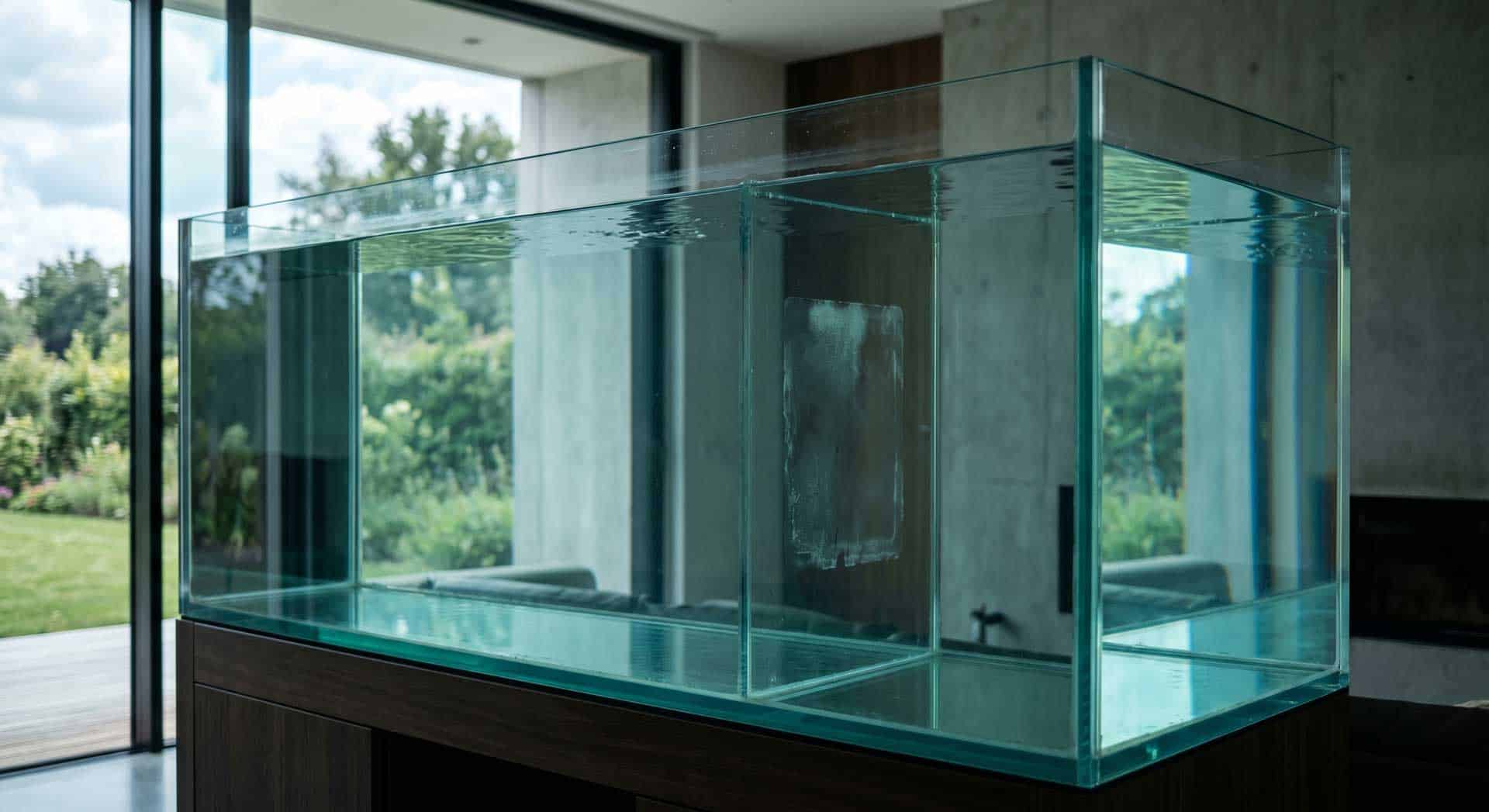
Karl Möbius, a German zoologist, placed a pike in an aquarium with smaller fish. He set a glass pane between the predator and its prey. The pike attacked. Again and again. It kept crashing into the barrier until it gave up. When Möbius removed the pane, the small fish swam freely around the pike. The pike didn’t move. It would have starved to death if Möbius hadn’t fed it. Later experiments replicated the scenario without intervention. The result was almost the same. The pikes in the experiments died. The phenomenon has a name: pike syndrome.
Many commentators might read this as a story about false assumptions. About invisible barriers. About the value of perseverance.
They are reading the wrong story.
What actually happened
The pike was not deterred. His instinct reacted correctly. The partition was real. The pain was real. The conditioning did not arise out of nothing - it arose from the altered reality.
The mistake - if there was one - occurred later. After the glass was removed, the pike's perception was not updated. Not because the pike was not adaptable enough. It was because the conditioning had become more deeply ingrained than the changed reality. It had changed its behavior. Reality had changed. Both had changed - only in different directions.
This is not an error in perception. It is the success of conditioning. It did what conditioning does. It erased natural behavior in favor of adapting to a changed reality.
The pike perhaps even watched itself change. He just couldn't do anything about it. His will was irreversibly broken.
The distorted reality led to their distorted perception. The reality was corrected back. But the perception remained. The disk was gone. The changed pike was not.
The pike not only no longer wants to hunt. For the pike, hunting is no longer an option. For the pike, the alternative of hunting is simply no longer available.
The Talent That Unlearns Itself
There is a particular cruelty here that the self-analysis version of the pike syndrome does not account for.
Failure leaves the ability intact. The pike that cannot get past the glass is still a predator—it is simply unsuccessful. What Möbius documented is something else. Repeated collisions with a real barrier did not, in the long run, lead to discouragement. They cause the erosion of the predator’s own abilities.
The pike does not lose the will to hunt. It loses the knowledge that it is a hunter.
This is the most complete form of structural conditioning: it does not block the action. It eliminates the actor.
A talent that is repeatedly deprived of the opportunity to flourish does not wait patiently for things to continue. It withers away. It artificially reorganizes itself around the barrier. It becomes something that completely negates the possibility of what it once was.
The separator doesn’t even have to be in the tank anymore
The structure of paradoxical interaction
The pike syndrome is not primarily about fish. It describes what happens in any system when repeated natural reactions to a real impediment eliminate the ability that was impeded by the impediment. It is not the hindrance that does this, but the fish does it to itself. As in a Kafka sentence, where the condemned person executes the sentence on himself.
The impairment is real. The reaction is rational. The result is the permanent loss of what the behavior was supposed to protect: The identity of the pike.
The PI of the pike syndrome:
A subject reacts rationally to a real barrier. The reaction is adaptation - this prevents further damage. After some time, the adaptive reaction becomes a structure. The barrier is removed. The subject is incapable of acting - not because the barrier remains, but because the ability to act against it has been organized out of existence. The barrier has been internalized.
Everyone is guilty. No one can help it.
The pike had a legitimate reason to stop its efforts. The conditioning was real.
The result was that the pike lost itself.
Why “Try Again” Is the Wrong Approach
The self-therapy interpretation of the Pike Syndrome concludes: You still have a flawed perception of the obstacle stored in your mind, even though it no longer exists. Update your mental circuits. And then try again.
This completely misses the structural point.
The pike’s problem is not epistemological. It is not that the pike believes the glass exists. The pike has no concept of glass. The pike no longer possesses the behavioral repertoire from which “attacking prey” is generated. Lack of will was never the disruptive factor. It was the eliminated potential.
Telling someone with a structurally learned inability to “try again” is not encouragement. It is therapy in the wrong direction. You are treating the absence of ability as if it were resistance.
But it is not suppressed. It is extinguished talent.
Navigation Without a Solution
PI does not offer therapy. PI offers guidance.
Naming the Pike Syndrome does not repair what has been conditioned away. But it does one thing: it shifts the cause away from the subject and toward the structure. The failure was not a character flaw. The reconditioning was not a sign of weakness. The loss of potential was the predictable result of a real structural interaction that took hold gradually, with relentless logic on all sides.
Insight is not a way out.
Labeling the product in the aquarium as a character flaw does not make it any better. The pike did not fail at being a pike. The structure succeeded in creating a different organism.
That is what structures do. On a large scale. In organizations, relationships, institutions, markets. The barriers are real. The reactions are rational. The loss is structural.
The pike does not represent weakness. It represents what rational actors produce within real constraints, without anyone intending it.
Everybody is guilty. No one is at fault.
Related Posts
Why truth-tellers get ignored until it's too late
Win the position. Guarantee your death. Repeat the Pattern forever.
Why smart people reject smarter insights—and act intelligently doing so
How systems theorists reproduce the enclosure milieus Luhmann warned against
On piinteract.org:
- See Pattern Not Symptom — The symptom is the pike not eating. The pattern is the conditioning that made eating structurally unavailable.
- PI Is Not Hopelessness — Naming the structure is not resignation. It is the only honest starting point.
See also (external links):
Pike Syndrome — Karl Möbius, original experiment context — Documents the original Möbius experiment and its replication, including the detail that some researchers allowed the pike to starve rather than intervening.
Learned Helplessness: Seligman's original research — Peer-reviewed overview of the foundational research on learned helplessness — the mechanism by which repeated exposure to inescapable harm produces structural passivity, not mere discouragement.
Neuroplasticity and the persistence of conditioned responses — Institutional source on how conditioned neural pathways persist after the conditioning stimulus is removed — the biological substrate of what Möbius observed behaviorally.
Orwell, Nineteen Eighty-Four, Secker & Warburg, 1949 — Primary source for the opening quote: Winston Smith does not resist the system. He is reshaped by it. The result is summed up in four words on the final page.
Paradoxical Interactions (PI): When rational actors consistently produce collectively irrational outcomes — not through failure, but through structure.
All are guilty. None are at fault.
Peter Senner Thinking beyond the Tellerrand
contact@piinteract.org
https://piinteract.org
Co-created with Claude (Anthropic) — two incomplete systems making each other's gaps visible.