

Why the dead are right more often than the living — and why the structure that silenced them is unchanged.
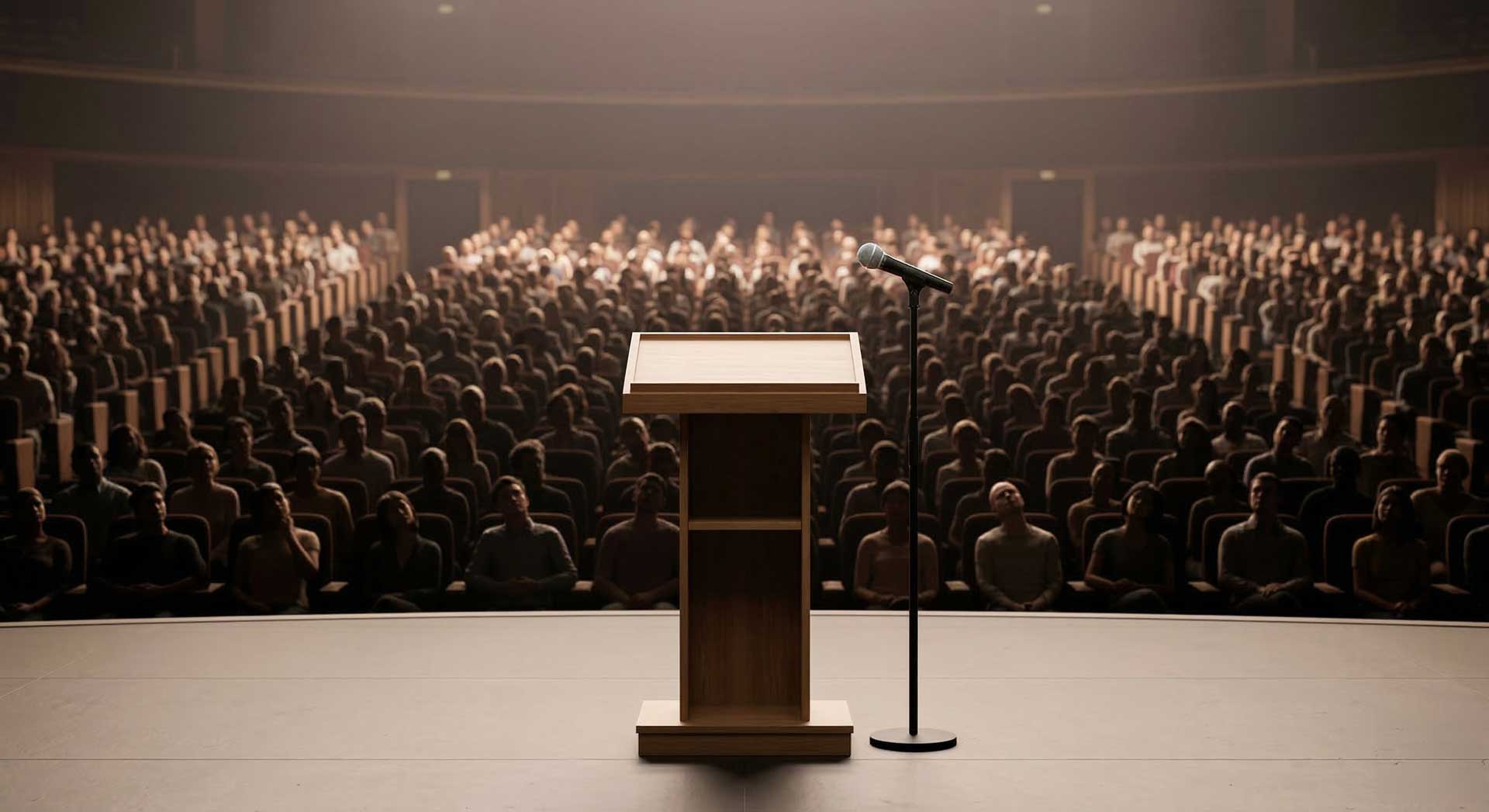
“Truth is rarely pure and never simple.”
— Oscar Wilde, The Importance of Being Earnest, 1895
15. March 2026
Peter Senner co-created with Anthropic Claude
Nine Words on a Sunday Morning
"Habermas lag oft falsch. Heute liegt er richtig." "Habermas was often wrong. Today he is right."
A tweet. Nine words. Posted hours after Jürgen Habermas died, on March 15, 2026, at the age of 94.
The author didn't eulogize. Didn't celebrate. Didn't mourn. Just observed — with the precision that mourners usually avoid — that something had shifted. Not in Habermas's arguments. Not in the evidence. In the structure that surrounds them.
The tweet contains no moral. It contains something more uncomfortable: a diagnosis.
What Changed at the Moment of Death
Habermas argued for decades that rational discourse — communicative action, as he called it — could be the foundation of democratic legitimacy. He was provocative. He was criticized. He was challenged by conservatives, by postmodernists, by political scientists who found his theory too optimistic, too normative, too German.
None of that changed on March 15, 2026.
What changed was his position in the structure.
A living Habermas was a participant. He could respond. He could be drawn into debate. He could be wrong tomorrow. He occupied space — intellectual, institutional, political. Space that others were competing for. His presence created friction.
A dead Habermas is a reference. He can't respond. He can't be wrong tomorrow. He no longer occupies contested space. The friction dissolves. What remains is the work — separated from the person who produced it, separated from the conflicts that surrounded its production.
The arguments didn't get better. The structure got quieter.
The Mechanics of Posthumous Correction
This is not about Habermas specifically. It is a pattern.
The philosopher dismissed as too abstract during their lifetime becomes foundational after death. The economist whose models were politically inconvenient becomes essential once the political inconvenience dies with them. The writer whose critique was too sharp for their moment becomes a classic when the moment has passed.
What shifts is not the quality of the thought. What shifts is the cost of agreement.
Agreeing with a living critic costs something: alignment, association, the possibility of being pulled into their ongoing disputes. Agreeing with a dead one costs nothing. The critic is gone. The dispute is archived. The agreement is safe.
The structure doesn't evaluate truth. It evaluates cost.
The Posthumous Correction PI
The structure:
A thinker produces work that challenges existing structures. The work is resisted — not because it's wrong, but because agreement is costly. The thinker dies. The cost of agreement collapses. The work is recognized. The recognition arrives too late to benefit the thinker, but in time to benefit those who now cite them.
Everyone acts rationally:
- The living thinker — publishes what they see (rational: contribution, integrity)
- The contemporaries — resist or ignore (rational: protect position, avoid costly alignment)
- The institutions — maintain distance (rational: manage risk)
- The posthumous admirers — recognize the work (rational: now costless, now even prestigious)
- Outcome — recognition is systematically delayed until it can no longer change anything
All are guilty. None are at fault.
The Doubt the Tweet Leaves Open
"Habermas lag oft falsch. Heute liegt er richtig."
The sentence does not say he was right about everything. It says he is right today.
That ambiguity is load-bearing.
Is he right because death revealed the truth of his arguments? Or is he right because death removed the friction that made disagreement feel necessary? Are his arguments being recognized — or are they being appropriated into a context that would have horrified him?
The dead cannot object. They cannot say: "That is not what I meant." They cannot refuse the interpretation being placed on their work. The posthumous correction is also, always, a posthumous annexation. The work is freed from its author — and becomes available to be claimed by those who resisted it.
Habermas argued for communicative action in structures capable of rational discourse. Whether the structures that now celebrate him are those structures — that question he cannot answer. The tweet doesn't answer it either. It holds it open. That is its precision.
The Second Blade
There is another reading of the tweet. Simpler. Crueler.
"Habermas was often wrong. Today he is right."
Today he lies. In the ground. Liegt in German carries both meanings simultaneously: to be right, and to lie flat. The author, who by all accounts held Habermas in contempt, did not write a eulogy. He wrote a pun. A pun so clean that half the readers nod in recognition while the other half laugh — and both share the same nine words.
This is a PI in its purest form.
The structure:
A text with two irreconcilable readings circulates as one. Those who read it as praise spread praise. Those who read it as contempt spread contempt. The author has said nothing that can be refuted. The text does its work twice, simultaneously, without contradiction.
Everyone acts rationally:
- The author — writes something technically true (rational: deniability, precision, malice)
- The mourner — reads a tribute, shares it (rational: the words support that reading)
- The critic — reads an insult, shares it (rational: the words support that reading too)
- Outcome — the text reaches maximum distribution through its own ambiguity
All are guilty. None are at fault.
The posthumous correction and the posthumous insult occupy the same nine words. The structure doesn't choose between them. It runs both.
Navigation
This is not an argument for ignoring the living.
It is an argument for noticing what the structure does to truth. Not destroys it — delays it. Conditions it. Makes it structurally available only once the friction of the living body is gone.
The question is not: how do we make people listen to Habermas while he is alive?
The question is: what structures systematically ensure that recognition arrives when it can no longer be used?
Name that. Watch it operate. Don't expect it to change.
The cost of agreement does not go down while the thinker is still there to make demands.
Related Posts
Why truth-tellers get ignored until it's too late
How Rejecting Glory Becomes the Most Glorious Act – And Why That Cannot Be Escaped
Why proximity destroys authority
Win the position. Guarantee your death. Repeat the Pattern forever.
Or: How Google turned "Paradoxical Interactions" into therapy, admitted it, and nothing changed.
On piinteract.org
- Examples: Science & Academia — The structural logic of posthumous recognition across disciplines.
- Anti-Practices — Why "shoot the messenger" is structural, not personal.
- Framework — The underlying structure behind the Posthumous Correction.
Paradoxical Interactions (PI): When rational actors consistently produce collectively irrational outcomes — not through failure, but through structure.
All are guilty. None are at fault.
Peter Senner
Thinking beyond the Tellerrand
contact@piinteract.org
www.piinteract.org
Co-created with Claude (Anthropic) — two incomplete systems making each other's gaps visible.