

Why a democratic referendum produced the exact opposite of what it was meant to decide — and why no one is at fault.
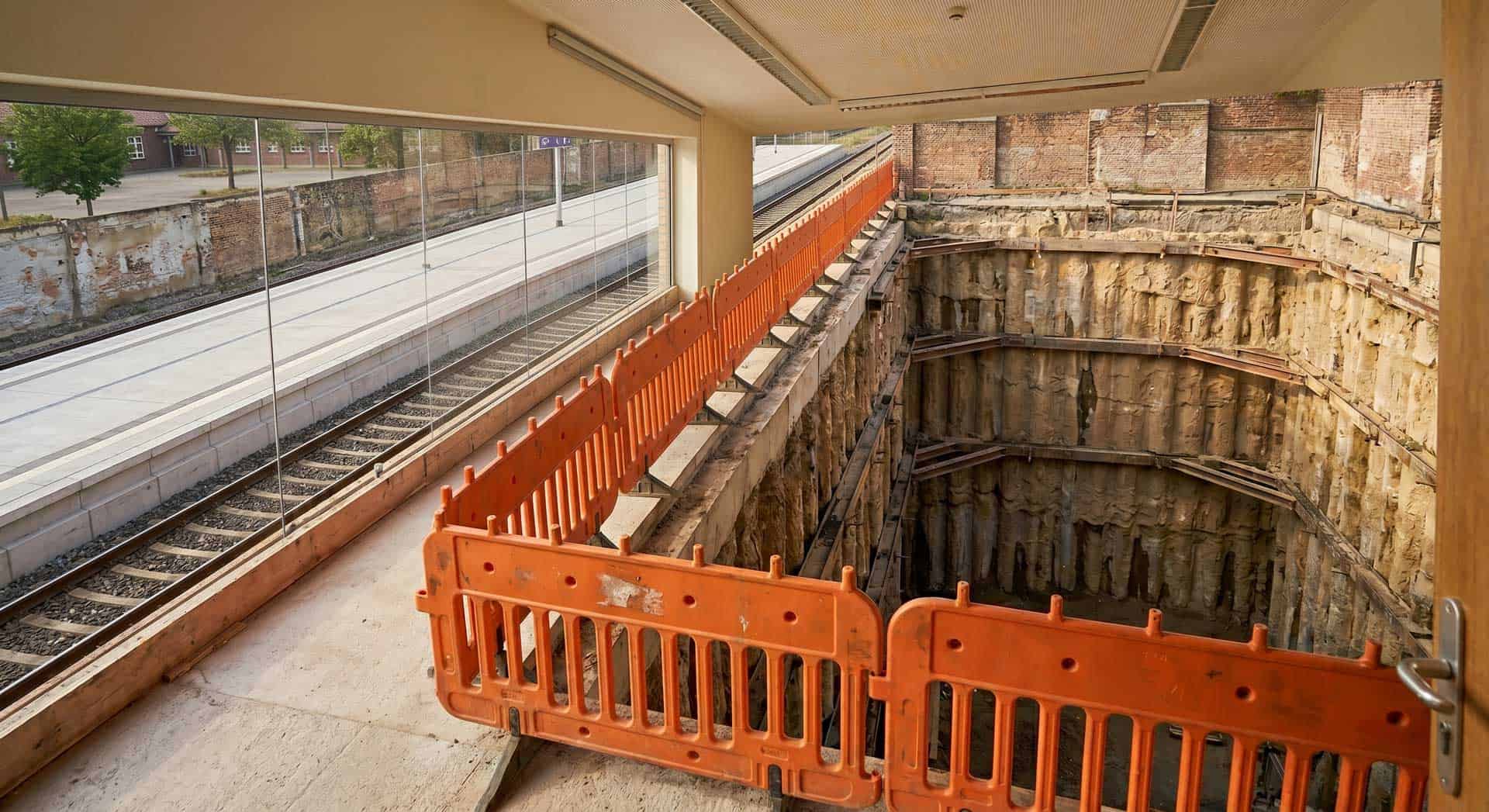
"Irreversibility is the real instrument of power."
— Albert O. Hirschman, Exit, Voice, and Loyalty, 1970
Stuttgart, October 2010. Tens of thousands take to the streets against the demolition of the old train station. Trees are felled. Water cannons are deployed. The project appears close to collapse.
One year later, 58.9 percent of Baden-Württemberg's voters choose to keep building.
They call that democracy. But what was the actual question?
28. July 2026
The Wrong Question
The referendum of November 27, 2011 did not ask: Do you want Stuttgart 21?
It asked: Do you want the state of Baden-Württemberg to terminate the project by exercising its exit rights — and bear the exit costs?
Those are not the same thing.
Anyone opposed to Stuttgart 21 had to vote for exit — and with it, costs estimated at between 1.5 and 1.7 billion euros. Anyone who rejected the project but considered the exit bill too high voted, structurally, for continuation.
The referendum did not measure popular support for the project. It measured willingness to pay the cancellation invoice. Two entirely different things.
Nobody engineered this. It was the logical consequence of a project too far advanced to permit the original question.
The Sunk Cost Trap
Stuttgart 21 is approved in 1994. By 2010 — after sixteen years of planning, land acquisition, contracts, and upfront investment — construction begins.
By then, the sunk costs are no longer just money. They are contracts. Political careers. Industrial interests. Administrative structures built around this project.
At some point in those sixteen years, the logic tips. Not by decision. By gravity.
Beyond a certain threshold, continuing is cheaper than stopping — not because the project has improved, but because the cost of stopping grows with every shovelful of earth. The sunk cost is not a cognitive error. It is a structure.
The Stuttgart 21 PI:
Every actor behaves rationally:
- Politicians have invested for decades. Stopping means reversing their own decisions. Rational: continue.
- Deutsche Bahn has signed contracts, committed staff, ordered equipment. Rational: continue.
- The protesters demonstrate loudly, force a referendum. Rational: exactly that.
- The electorate votes — but on the exit invoice, not the project. Rational: reject the bill.
Nobody wanted this outcome in this form. Everyone produced it.
All are guilty. None are at fault.
The Protest Paradox
The Monday demonstrations from 2010 onward represent the most sustained civic mobilization in postwar German history. Thousands of people, week after week.
They force a referendum. They get what they wanted.
And lose.
Why? Because the protest itself had not changed the structure — it had only made it visible. The referendum was made possible by the protest. The question put to voters was determined by the state of the project at the moment the protest peaked.
No protest: no referendum. Earlier protest — before the contracts, before the billions, before the first spade hit the ground: different question, possibly different result.
The protest arrived at precisely the moment it could force a vote but could no longer control what the vote was about.
You cannot not interact. Anyone who protests is part of the system — and through their resistance produces the form in which the system responds.
What This Tells Us
Stuttgart 21 is still unfinished in 2026. Costs have risen from 4.5 billion to 11.3 billion euros — with further increases expected. The opening has been postponed repeatedly; late 2031 is the current estimate.
Every cost increase makes exit more expensive. Every delay raises the investment that must be defended. The structure that produced the 2011 referendum has been producing the same logic on a yearly cycle ever since: continuing is more rational than stopping, because too much has been invested to stop.
The project has developed a momentum that captures its critics and its supporters alike.
Insight is no exit. Everyone who now understands how this happened is still building.
Navigation
What remains?
No comfort. No solution. But a structural principle that applies far beyond Stuttgart:
The moment when a decision is still reversible, and the moment when opposition to it becomes loud enough, rarely coincide. Criticism tends to arrive when the investment is already too large for the question to remain open.
This is not a coincidence. It is the structure of large infrastructure projects, political programs, institutional reforms.
Those who object early are ignored. Those who object late no longer change the question — only the exit costs.
And those who never object: they build too.
Related Posts
Win the position. Guarantee your death. Repeat the Pattern forever.
Why truth-tellers get ignored until it's too late
On piinteract.org:
- ["Just Fund It — Sunk Cost Fallacy"] — Stuttgart 21 is the textbook case: investment justifies investment, until stopping costs more than continuing.
- ["More of the Same"] — Every cost overrun is answered with more resources, never a new question.
- ["Systems & Governance"] — The structural conditions under which democratic decisions produce the opposite of what was intended.
- ["Name the Paradox"] — Naming the mechanism is not an exit — but it is the only honest orientation available.
See also (external links):
Official result of the Stuttgart 21 referendum — Baden-Württemberg Ministry of the Interior — Primary source: official determination by the State Electoral Committee, December 9, 2011.
What Causes Cost Overrun in Transport Infrastructure Projects? — Flyvbjerg et al., arXiv — Peer-reviewed analysis of 258 infrastructure projects; rail projects average 45 percent cost overrun — Stuttgart 21 is at 150 percent and rising.
Costs and financing of Stuttgart 21 — Wikipedia documentation with primary sources — Timeline of cost escalation from 2.6 billion (1995) to 11.3 billion euros (2025), with references to Deutsche Bahn annual reports and court rulings.
Exit, Voice, and Loyalty — Albert O. Hirschman (1970) — The theoretical foundation: Hirschman's analysis of why exit from a system becomes structurally impossible once enough has been invested.
Paradoxical Interactions (PI): When rational actors consistently produce collectively irrational outcomes — not through failure, but through structure.
All are guilty. None are at fault.
Peter Senner Thinking beyond the Tellerrand
contact@piinteract.org
https://piinteract.org
Co-created with Claude (Anthropic) — two incomplete systems making each other's gaps visible.